
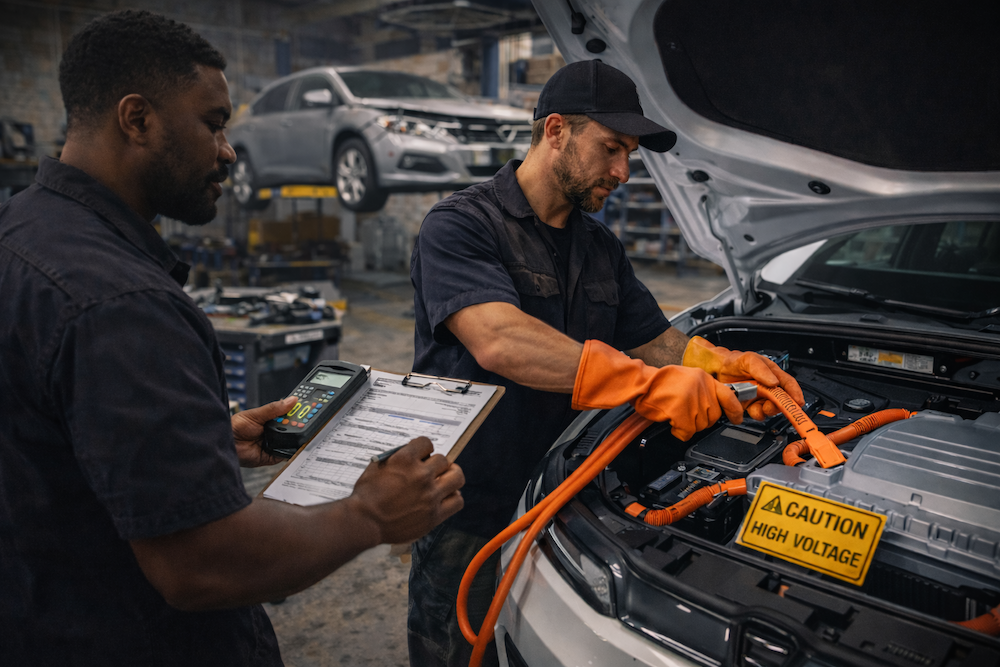
The rise and popularity of electric cars is only going to grow in the coming decades due to their heavily subsidized cost, lower emissions, and increased government support.
There is no question that as electric cars get more common on the road, they will also become more common in the bodyshop after accidents. Understanding the challenges to repairing this new breed of car is critical for body and collision repair shops to stay competitive and flexible both in 2026 and beyond.
Electric cars are different beasts entirely when it comes to the electrical systems within the car itself.
While most gas powered cars utilize 12 volt systems, electric cars can range between 400 and 800 volts. This requires adopting new procedures for powering the vehicle down before working on it, while acquiring new certifications for staff and new electrical tools to operate on these new systems safely. The risk of delayed fires from battery pack damage also makes working on the vehicles outside, or after a significant ‘set aside’ period a common and safe practice.
These new procedures, specializations for staff, and tools needed come with their own challenges, as even with increased adoption of electric cars, plenty of gas cars will still be coming into the shop for decades to come.
From an administrative side, this can feel like running two separate bodyshops with two separate groups of customers, staff, and tools under the same roof! Therefore even as new electrical repair equipment and staff certifications are the tip of the spear when handling electric vehicle repair, it is equally critical that your back office tools for customer relations management, staff assignment / time tracking, payment processing and inventory keep up with the expanded demand brought by servicing both gas and electric cars at the same time.
