For any business to serve customers well, the employees doing the work must feel comfortable, confident, and supported.
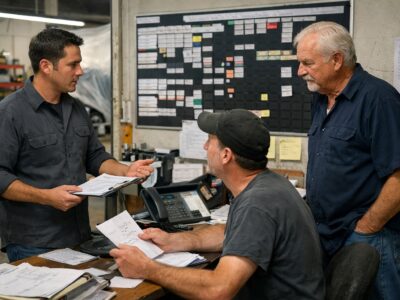
These conditions don’t just lead to better face-to-face customer service—they also strengthen teamwork, improve how crises are handled, and raise the overall mood of the shop. All of these factors directly contribute to a better customer experience and a more profitable business. This is especially true in collision repair and bodyshops, where employees work around hazardous chemicals and equipment, manage stressed customers, and juggle large volumes of paperwork. In an environment like this, the difference between supported and unsupported staff is felt quickly and clearly.
Supporting your team effectively comes down to two core elements:
Giving them the right tools and providing clear direction. The first step may sound simple, but it can be difficult to execute well. Having the “right tools” doesn’t only mean investing in newer or more expensive equipment. It also means listening to your technicians about the tools, brands, accessories, and workflows they are most comfortable using. A skilled technician working confidently with familiar equipment will often outperform someone struggling to adapt to unfamiliar or ill-fitting tools, regardless of how new they are. Comfort, trust, and efficiency matter just as much as modernization. The second key element is clear, consistent communication. Supporting your team goes far beyond casual check-ins or surface-level conversations. Taking the time to understand your employees’ long-term goals, strengths, and current workload while making sure expectations are clearly communicated allows you to assign work more intelligently and respond faster when issues arise. Just as importantly, this level of engagement helps employees feel valued and understood, which directly impacts morale, retention, and day-to-day performance.
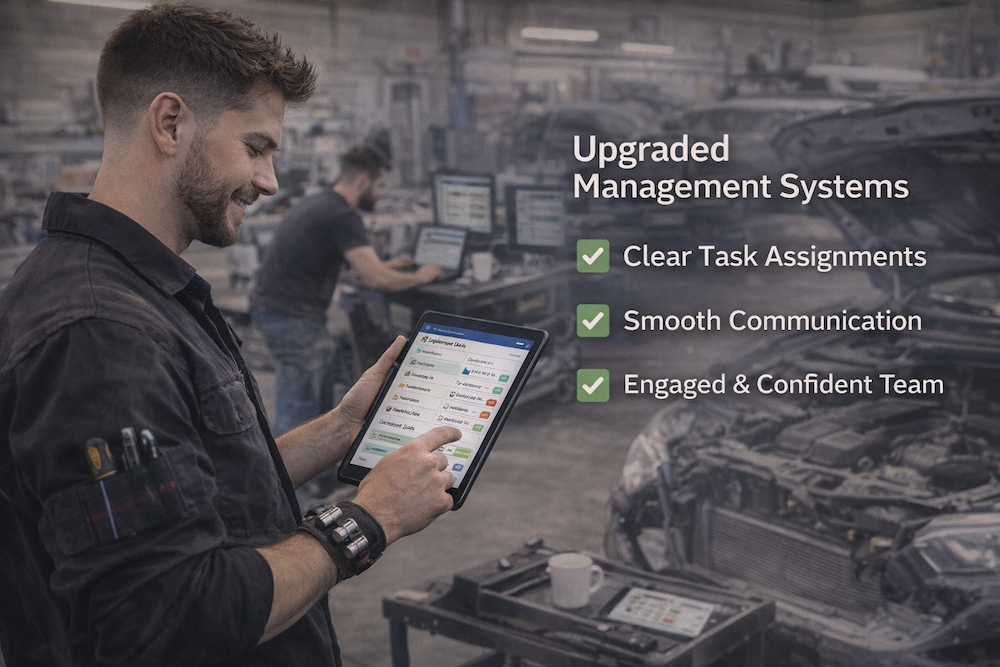
Of course, collecting, tracking, and acting on all of this information can quickly become overwhelming without the right systems in place. This is where modern bodyshop management software plays a critical role. Software designed specifically for collision repair shops can centralize employee information, streamline communication, and simplify everyday tasks like time tracking, damage documentation, inventory visibility, and job status updates. Real-time updates on job progress helps the whole team see where additional support is needed before small issues turn into delays or frustrations.
By upgrading to bodyshop-focused management tools, you’re not just investing in technology; you’re investing in your people. Giving your team better tools, clearer communication, and stronger support systems benefits your staff, your customers, and ultimately your bottom line.