Many shop owners are starting to feel nervous about new car tech.
Automatic braking, lane assist, and cameras everywhere make it easy to think that if cars crash less, collision shops will eventually lose business. But the real issue isn’t “less work”, it’s different work.
Modern safety features help prevent some crashes. For example, data shows that rear-end crashes can be cut roughly in half when cars use tools like forward collision warning and automatic emergency braking. However, crashes are not disappearing. Fully self-driving cars are still uncommon, and most vehicles still rely on human drivers. Because human decisions and mistakes cause many serious accidents, collisions will continue for the near future.
What is changing most is what happens after the crash.
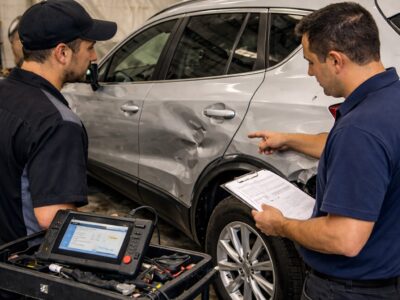
Even “minor” damage isn’t minor anymore because today’s vehicles pack expensive sensors, cameras, and radar into bumpers, mirrors, and windshields.
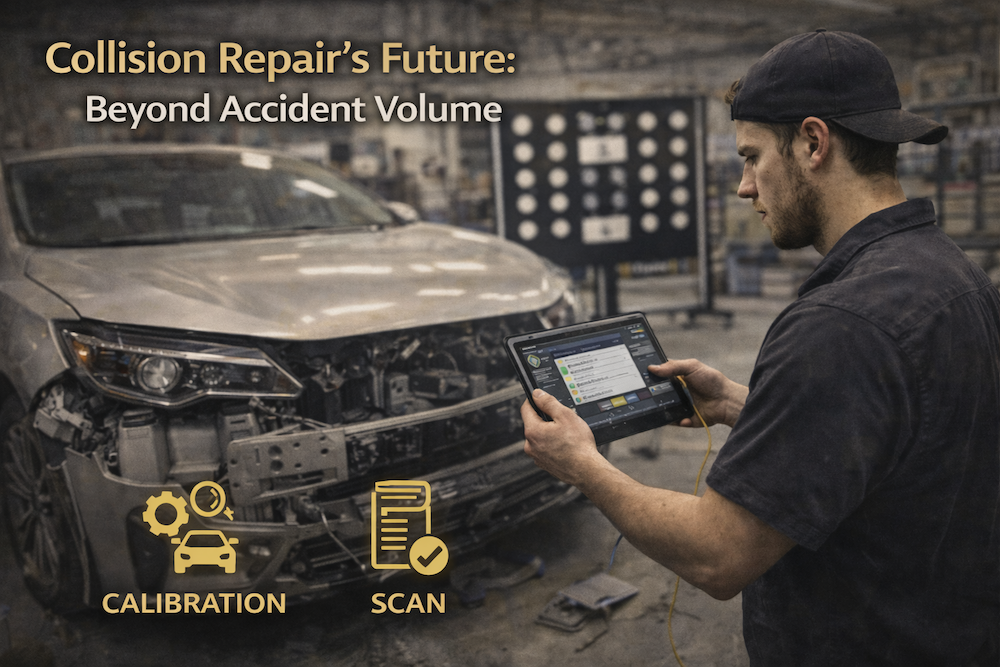
I have mentioned multiple times in my past articles. The auto body industry is experiencing a transition period where even small hits can now require a pre-scan, a post-scan, calibration, and careful documentation, turning repairs into a more technical process than just metal and paint. That’s why repair complexity and costs are rising, and why “calibration is the new body work.”
What Can You Do?
To thrive, auto body shops must adapt to this new reality. Here are the two action you can take right now to prepare your business:
- Educate Customers: Explain why repairs on advanced vehicle systems are complex and critical. This builds trust and explains costs.
- Focus on Value: Position your shop not just for speed, but for expertise in high-tech repairs. Late-model vehicles often have high Actual Cash Value, making complex repairs economically viable.
Advanced vehicle tech may mean fewer accidents. But it doesn’t mean the end of body shops. Instead, it points to a shift: fewer jobs, but higher revenue per job, all driven by complex repairs.