
Conflict is unavoidable in any business, even those that are well run.
Whether it comes from frustrated customers, workplace disagreements, or simple mistakes that escalate into arguments, conflict is part of daily operations. For body shops and collision repair businesses, this reality is even more strongly felt. Owners and staff regularly deal with stressed customers, tight deadlines, complex repairs, and insurance pressures. When conflicts are left unaddressed, they can quickly turn into negative reviews, distracted and risk avoiding employees, and significant wasted time, all of which directly impact a shop’s profitability.
By working to prevent conflicts before they begin and resolving them constructively when they do occur, shop owners can create a more focused, productive, and stable work environment.
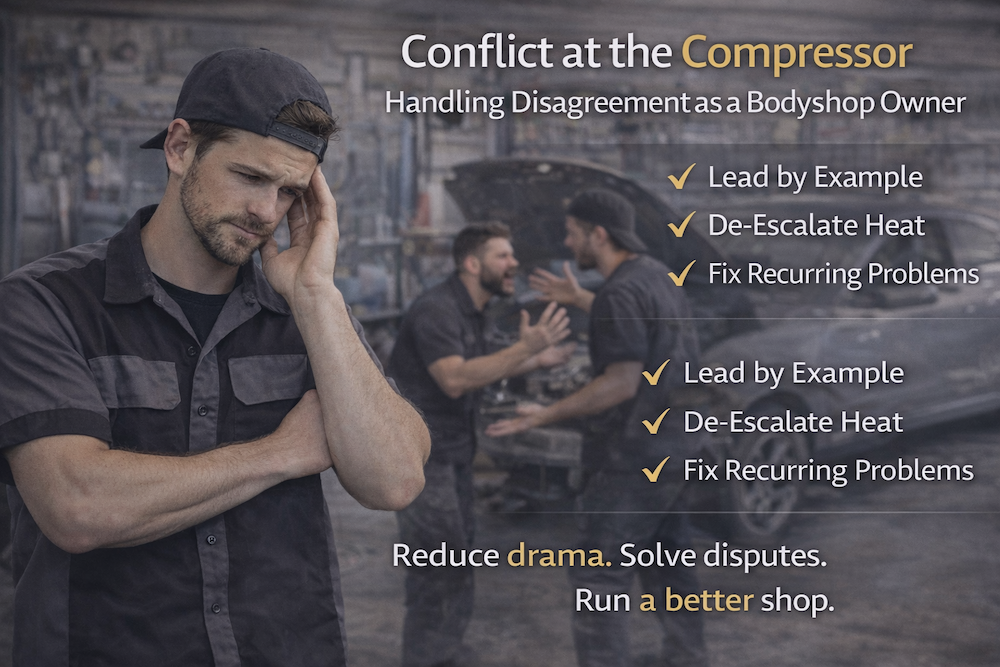
The first step in reducing conflict is leadership. Owners and managers set the tone for how disagreements are handled.
By refusing to escalate tensions with customers, supporting employees when mistakes happen, and not tolerating hostility between staff members, leadership can clearly define and display acceptable behavior. A team often mirrors its leadership, and leading by example provides a clear standard for professionalism and problem-solving. It also prepares leadership to step in effectively when sensitive situations require direct involvement.
When conflicts do arise, the immediate goal should be de-escalation.
Separating heated parties, whether that means stepping back for a moment from an upset customer or assigning technicians to different tasks, helps prevent emotions from intensifying. Once tempers cool, usually after some time has passed, discussions become more productive, and solutions are easier to reach. Addressing the issue calmly and respectfully increases the likelihood of a resolution that preserves both customer relationships and team morale.
The most effective conflict management strategy, however, is prevention.
Many conflicts stem from unclear processes, poor communication, or unexpected surprises. Identifying recurring pressure points, such as billing confusion, repair delays, or unclear job assignments, allows shop owners to address problems before they escalate. Modern, body shop–focused management software can play a key role in this process. Systems designed specifically for collision repair help reduce customer frustration by preventing surprise charges, improving transparency, and providing regular updates on repair progress. On the shop floor, strong management systems ensure tasks are assigned clearly, time is tracked accurately, and job statuses are visible to the entire team. This clarity helps prevent misunderstandings, finger-pointing, and resentment from taking hold. By using modern tools to support communication and accountability, shop owners can reduce conflict at its source and maintain a healthier, more productive workplace.
Addressing these issues proactively allows even long-standing problems to be managed before they threaten the success of the shop.