
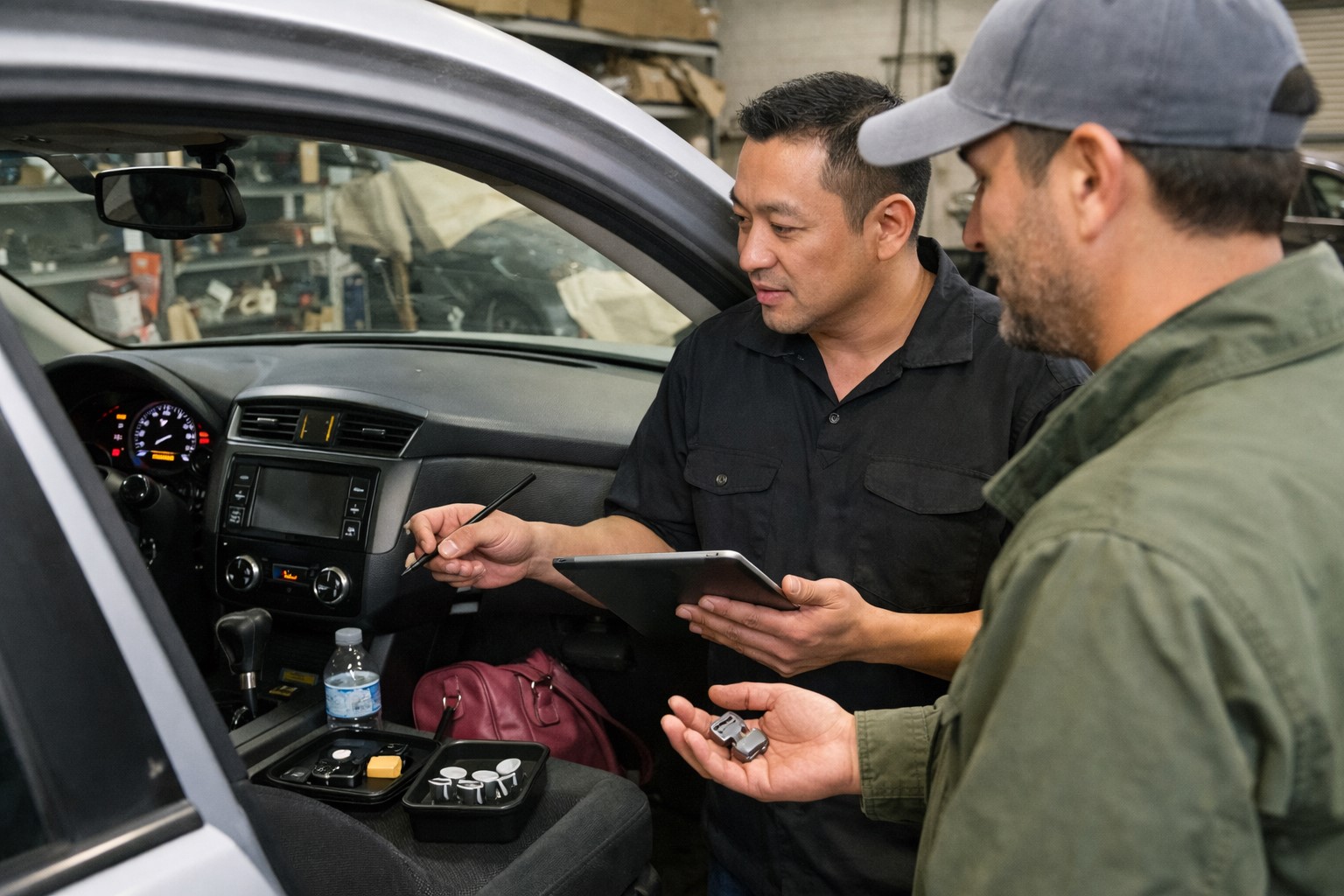
A customer drops off a vehicle for collision work; the visible damage is discussed, the keys are handed over, and everyone assumes the rest is fine. Then the collision repair shop moves the car and finds the fuel level is near empty, a warning light is already on, the steering pulls, the wheel lock is nowhere in the vehicle, and the customer still has personal items in the cabin. That is how a routine drop-off turns into delay, confusion, and blame.
Visible damage is only one part of intake. The other part is the baseline condition. If the collision repair shop does not confirm how the vehicle arrived, the repair order begins with gaps that are usually filled in later by memory, assumption, or argument.
That is why a good drop-off conversation sounds different from a damage review. It includes questions like:
-
Is the fuel level low enough to affect movement or scanning?
-
Are any warning lights or dash alerts already on?
-
Does the vehicle pull, vibrate, hesitate, or have any known drivability issues?
-
Is there a wheel lock in the vehicle, and where is it?
-
Are there personal items or accessories the customer wants noted before production starts?
None of that is overkill. It is what keeps a collision repair shop from inheriting unrelated problems halfway through the job.
A check engine light that was already on should not become a post-repair argument. A missing wheel lock should not stall the job after teardown. A prior drivability complaint should not surprise the team during a road test.
The best intake teams do not just document damage. They document the starting condition. That gives the front office cleaner repair order notes, gives production fewer avoidable interruptions, and gives the collision repair shop a stronger position when questions show up later. Drop-off works better when the team confirms what the vehicle is, not just what got hit.

What does your collision repair shop require at drop-off besides damage photos?