
Why “Green” Becomes a Survival Move Under Cycle-Time Pressure?
In a collision repair shop, the booth runs long when flash times drift. Filters clog early. Utility bills rise while hazardous pickups stay frequent. Each issue feels small, but together they slow cycle time and tighten cash.
“Going green” in an auto body shop isn’t branding. It’s basic cost control: energy, materials, and workflow. If a change cuts waste, reduces rework, or lowers overhead, it helps keep techs paid and bays moving.
The Real Cost Is Hidden Overhead You Don’t See on Estimates
Most shops assume sustainability means a remodel, a big bill, and a press release. What tends to happen instead is that you are already paying for inefficiency through electricity, compressed air, solvent loss, and mixed waste disposal. Those costs are spread across jobs, so they are easy to ignore until cash gets tight and WIP(Work In Progress) starts backing up.
This is also where VOC exposure matters. VOCs are volatile organic compounds, meaning chemicals that easily evaporate into the air at room temperature. In a collision shop, VOCs often come from solvent-based paint materials, reducers, cleaners, and some adhesives. When they evaporate, they become vapors your team breathes, and they add load to ventilation, filters, and compliance.
Start with Upgrades That Behave Like Shop Improvements
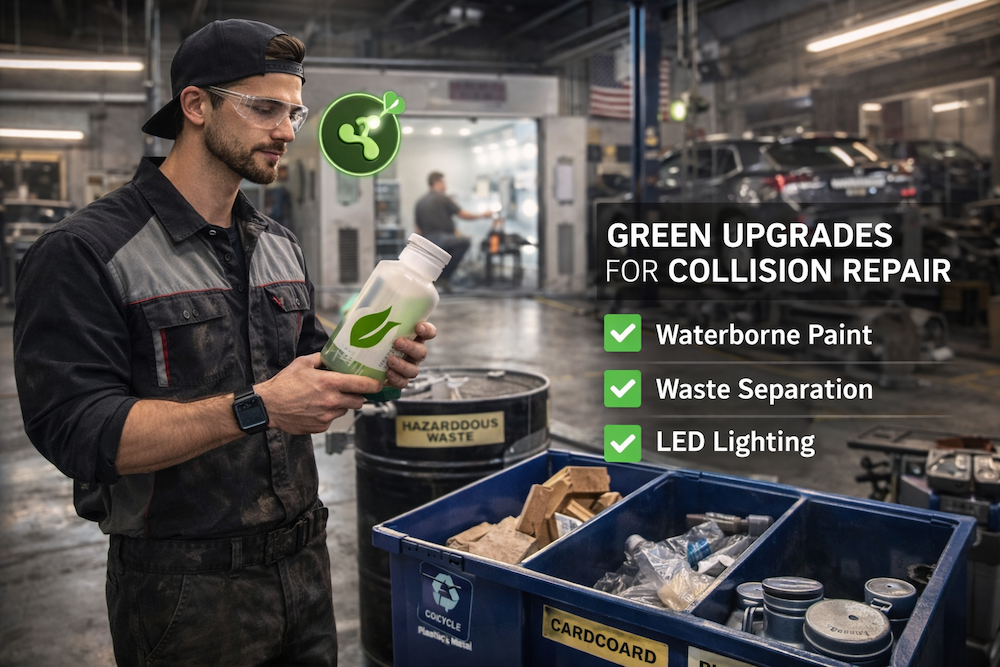
Waterborne systems can reduce VOC levels and improve air quality, but the outcome depends on humidity control, mix room discipline, and booth habits. If techs over-reduce, mix sloppily, or open booth doors at the wrong times, dry times drift, and cycle time suffers. The label on the can is not the win. Process control is.
LED lighting is usually the easiest to pay back. Better light improves match confidence and reduces “it looked fine inside” problems at delivery. Lower power draw cuts overhead without changing touch time. Fewer bulb failures also mean fewer interruptions mid-job.
Waste handling is not glamorous, but it is real money. Clear separation of solvent waste, cardboard, plastics, and metal reduces hazardous volume. When fewer materials are tossed into the wrong drum, pickups can drop, and your team handles materials with less confusion.
Keep It Controllable: One Upgrade, One Baseline, One Rule
Avoid launching a big “green program.” Keep it small and measurable:
-
Pick one upgrade with a clear payback story.
-
Track a 30-day baseline: electric use, filter changes, solvent or waste volume.
-
Change one workflow rule tied to energy or material control.
-
Consider certifications only if fleets or DRP partners require them.
Treat sustainability like any other shop system: define it, measure it, and control it. When energy use, waste flow, and booth habits tighten, cycle time stabilizes, and cash pressure eases.