All businesses rely on tools to help or improve the delivery of their services.
Large retail stores use forklifts to move inventory, dentists rely on specialized instruments to perform procedures, and photographers depend on cameras and lighting systems to produce professional results. Collision repair and body shops are no different. From frame racks and welders to spray booths and scan tools, modern body shops depend on a wide range of specialized equipment to repair vehicle structures, refinish panels, and properly restore safety systems. What all businesses share, however, is that their tools and equipment slowly wear out and depreciate over time. This depreciation affects productivity, safety, and even the financial reporting of the business.
What of Body Shops?
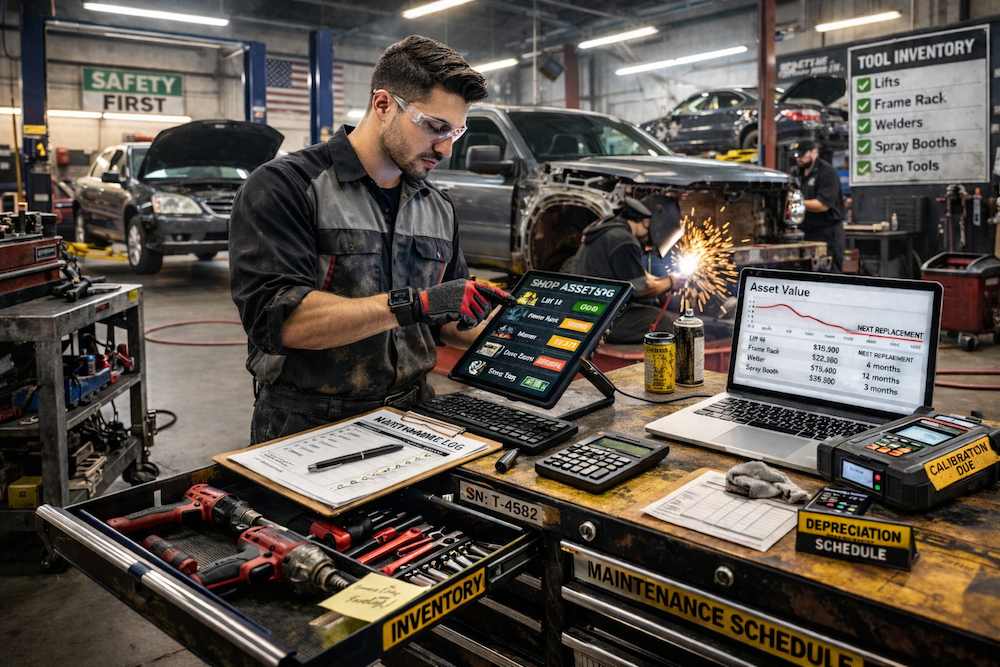
For a bodyshop’s physical assets, whether they are the building itself or the lifts, frame machines, welders, air compressors, sanders, spray booths, or diagnostic scan tools within it, will gradually decline in value and usefulness as they age, wear down, or become outdated.
In a body shop, this wear is often most noticeable in frequently used equipment. A vehicle lift may begin to operate less smoothly or require frequent hydraulic repairs. A frame rack may need recalibration to maintain accurate pulls. Welders can experience inconsistent output or grounding issues.
Allowing tools and equipment to degrade without monitoring them creates both productivity issues and safety risks. Worn lifting equipment can become dangerous. Faulty electrical tools can increase fire risk. Inaccurate measuring equipment can lead to improper structural repairs.
Planning for maintenance and eventual replacement should be part of long-term shop leadership strategy, not a reaction to failure.
There is also a financial dimension to consider.
In most jurisdictions, business assets depreciate for tax purposes. While the equipment may still function, its accounting value declines over time. Properly tracking asset purchases, service life, and depreciation schedules can provide legitimate tax benefits and improve the financial planning of your shop.
Tracking equipment condition, maintenance history, and depreciation manually can quickly become a time-consuming task.
Repairs, accidental damage, preventive maintenance, and usage intensity all affect the asset’s lifespan. Integrating body shop-focused management software can simplify this process by logging equipment purchases, scheduling maintenance reminders, and organizing all your shop’s documentation in one place. While software does not replace physical inspections and the tool knowledge of your team, it can centralize the information needed to make smarter decisions. By proactively monitoring equipment condition and depreciation, your shop can plan replacements before failures disrupt workflow. This reduces downtime, protects technician morale, improves shop safety, and supports more accurate and beneficial financial reporting.
The well-maintained and properly tracked tools in the shop are not just day-to-day work assets; they are long-term investments that directly influence productivity, compliance, and the long-term profitability of your business.