By: Arthur Roseberry
Whether it is adding automation to a manufacturing plant or streamlining checkout at a retail store, optimization and automation are essential for long-term business success. In many industries, where to implement either of these ways forward is relatively clear. In collision repair and body shops, however, deciding what to optimize and what to automate requires a more careful balance.
When evaluating a process inside your shop, one critical question should guide your decision:
How will the customer feel this change?
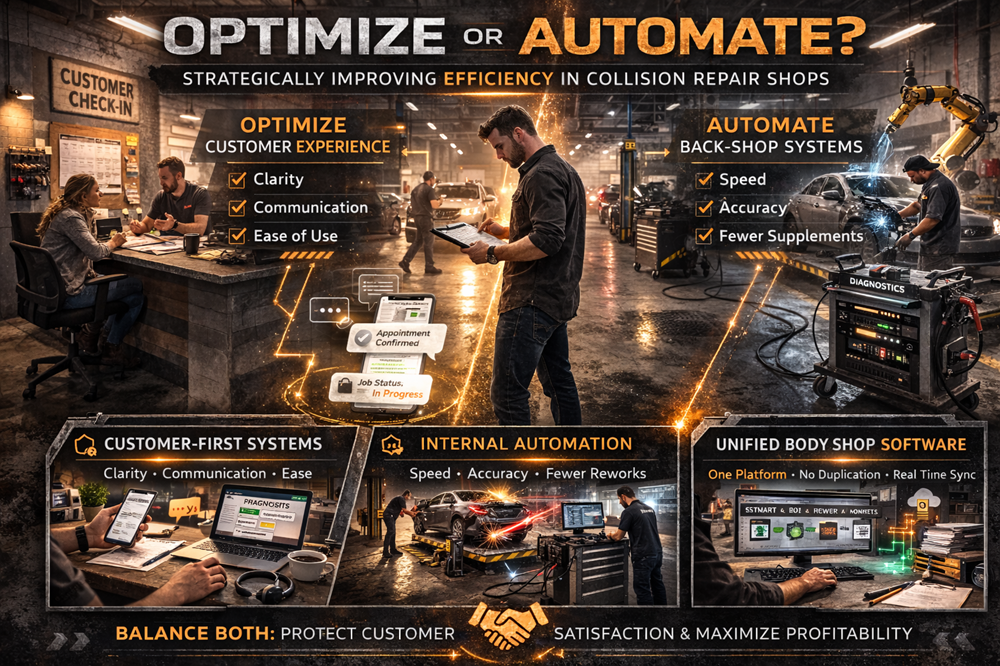
For example, automating appointment scheduling or status updates may improve internal efficiency, but if this system feels impersonal or confusing to customers, it can instead frustrate already stressed, time-sensitive vehicle owners. Collision repair customers are already dealing with unexpected expenses, insurance claims, and transportation challenges that weigh on their minds. Overly rigid or difficult customer-facing automation can create friction at the exact moment when reassurance and clarity are most needed.
On the other hand, many back shop improvements are largely invisible to customers but have a direct impact on profitability and cycle time. Examples include digital measuring systems for structural repairs, computerized paint mixing systems, and modern, advanced, primarily automated diagnostic scan tools. Customers do not directly interact with these tools, so they only feel the benefit through more accurate repairs, faster turnaround times, and fewer supplements or rework issues. As a general guideline, the systems customers directly interact with should be optimized for clarity, simplicity, and ease of use, while internal systems are often better candidates for time-saving automation.
The goal is not automation for its own sake, but strategic implementation that improves the efficiency of your shop without damaging the customer experience.
That said, not every optimization or automation upgrade to your shop requires expensive equipment. Many inefficiencies in body shops stem from fragmented, generic management systems. When estimating platforms, accounting software, customer communication tools, parts tracking, and scheduling systems operate separately or are not designed for the collision repair industry, staff are forced to duplicate data entry and rely on manual workarounds. This costs a great deal of time, increases the risk of error, and makes either the optimization or automation of other systems across the shop more challenging.
Implementing a unified, body shop-specific management system can both automate and optimize a huge number of points across the entire shop. For example, CCC estimates can flow directly into invoicing, customer records can sync with job status updates, and payment tracking can integrate with accounting systems. Automated status notifications, centralized job tracking, and digital document storage reduce confusion while optimizing the human element within your shop’s customer interactions. Automation in a body shop environment needs to support technicians, estimators, and front office staff rather than replace them. Knowing where to optimize and where to automate is an increasingly valuable leadership skill. In a competitive market with tightening margins, the shops that improve internal efficiency while protecting the customer experience will stand out.