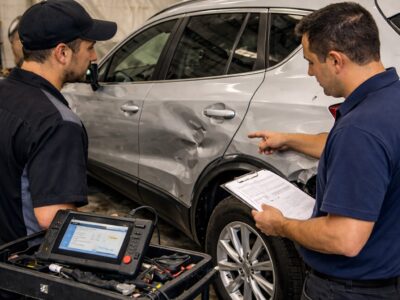

It is mid-January. Many auto body and collision repair shops have a vehicle stuck in a bay, waiting on a specific sensor.
When the part finally arrives, the wholesale price is significantly higher than the December estimate, and the margin on that repair disappears instantly. At the same time, insurers are rejecting calibration supplements.
The challenge is not about whether the work was completed, but about documentation. Payment is denied because the shop submitted an invoice instead of a photo showing proper target placement.
The Big Picture: This is the Q1 cash flow trap. Auto body and collision repair shops are squeezed between rising hard costs and increasingly strict documentation requirements.
The Real Issue:
The problem is not just general inflation. It is a specific shift in supply chain costs and administrative compliance.
- The Cost Basis Changed: On January 1, tariffs on imported semiconductors increased from 25% to 50%. This directly spikes the “landed cost” of ADAS modules, sensors, and other parts. If you rely on pricing from Q4 2025, you lose money on most electronic replacements if not carefully checked.
- The Documentation Shift: Insurers have moved from paying for procedures to paying for proof. The friction point is data. Without a Standard Operating Procedure (SOP) for evidence, your billable hours are vulnerable.
Your Q1 Defensive Checklist
- Control pricing and documentation at the shop level Recheck live part prices on open repairs, especially ADAS and electronics. Do not only rely on listed prices. At the same time, require clear calibration proof, including scan results, photos of target setup, and confirmation the procedure completed. Specific pricing and documentation gets you paid. Assumptions do not.
- Protect floor space and cash flow Confirm availability of critical parts before teardown. If a sensor or LiDAR unit is weeks out, keep the vehicle out of production. A car waiting on parts blocks bays, slows throughput, and drains cash.
Specific pricing and documentation gets you paid. Assumptions do not.
The first quarter requires aggressive management. Anticipate parts volatility and treat documentation as a critical part of the repair process.
Which part price increase has already cost your shop money this year? And how often do those increases show up after the estimate is already written? Share your experience with us in the comments.