Whether you feel excited or cautious about it, AI-assisted and self-driving vehicle technology is steadily rolling out to the streets.
With continued advancements in self-driving systems and automation, vehicles are becoming increasingly complex and more reliant on sensors, cameras, radar, and software, all while getting into fewer accidents. For many industries, this shift primarily affects logistics or infrastructure. For collision repair and body shops, however, it introduces several significant considerations that will directly affect the business model and profits of the entire collision repair industry. There are three major areas where advanced driver assistance systems (ADAS) and self-driving technology are likely to impact collision repair:
1. Significant Changes in Accident Volume
Advanced safety systems such as automatic emergency braking, lane-keeping assist, and full self-driving have been shown to reduce all types of accidents. While this is positive for public safety, it may gradually reduce the quantity and common types of collision repairs. However, accidents will never disappear entirely. Human drivers will remain on the road for decades, and even automated vehicles can be damaged due to weather, road conditions, system limitations, or interaction with manually driven vehicles. Rather than eliminating work, this shift will change the types of repairs being performed, such as:
2. Increased Vehicle Complexity and Required Training
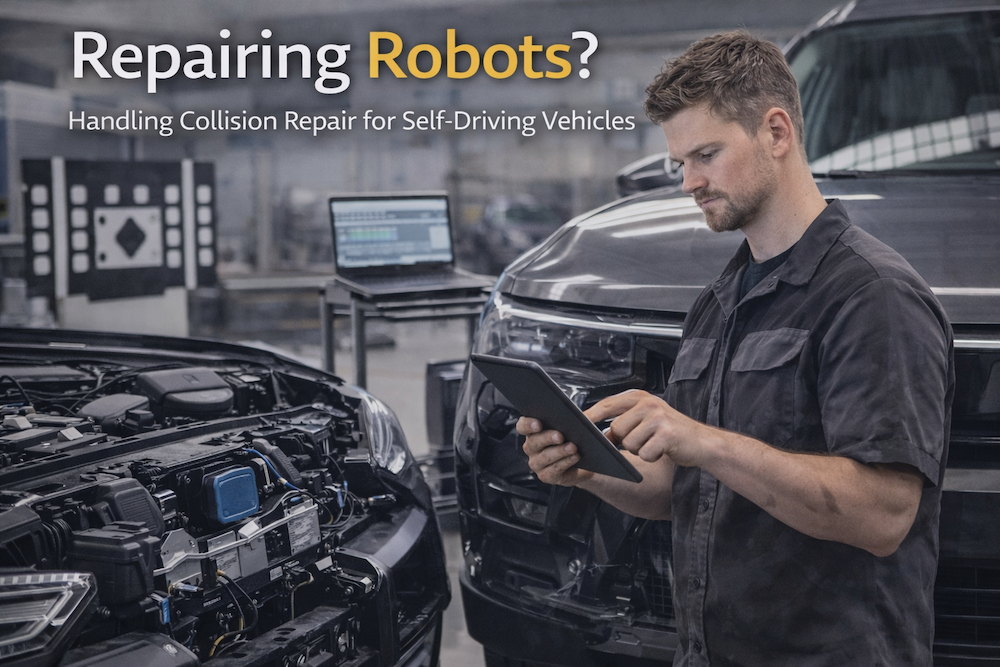
Modern vehicles already rely heavily on cameras, radar modules, ultrasonic sensors, wiring harnesses, and onboard computers. Self-driving or highly automated vehicles expand this complexity much further. Even relatively minor collisions may soon require complex sensor recalibration, software diagnostics, or specialized scanning equipment to even identify the extent of the sensitive systems that have been damaged.
Shops that want to remain competitive will need updated tools, expanded access to new manufacturer procedures, and additional technician training and certifications.
Calibration bays, scan tools, and knowledge of constantly updating OEM repair standards will become essential rather than optional for your shop’s survival.
3. Insurance, Data, and Access Challenges
Advanced vehicles introduce new insurance and liability questions. Determining fault for insurance payments may involve handling complex vehicle data logs. Repairs may require software updates, reinstallations, or interaction with proprietary systems controlled by manufacturers. Access to certain components, diagnostic systems, or security-gated modules may involve strict procedures or authorization requirements. These facts can make repair access both heavily regulated and a bureaucratic nightmare. However, failure to follow these updated OEM guidelines perfectly every time will quickly create serious liability risks for shops.
Although these developments may sound intimidating, they also present opportunities.
Collision repair businesses that proactively invest in training, tools, and process improvements can position themselves as trusted specialists in advanced vehicle repair and greatly benefit from their shop’s flexibility. As vehicles become more complex, customers and insurers increasingly look for repairers who can confidently handle multiple modern systems their vehicles may have. This is where strong shop management practices matter. Modern body shop management software can help leverage your team’s skills by managing the additional documentation, new certifications, advanced calibration records, and expanded insurer communications that advanced vehicle repair requires. As paperwork, scanning reports, and compliance requirements grow, efficient digital systems will not just prevent errors and delays, but ensure your shop can stay on its toes to react to the coming rapid changes in the self-driving vehicle market.
This massive change to the vehicles on the street will happen slowly, and conventional vehicles will remain common for many years. But the direction for the collision repair industry is clear: increasing technology, increasing documentation, and increasing specialization. In periods of industry change, the shops that prepare early thrive while those that resist adaptation struggle. By ensuring your bodyshop has modern, specialized management systems in place today, your shop can treat these coming industry shifts not as a terrifying threat, but as a major competitive advantage.