
For a business to succeed and be chosen by customers, it must offer goods or services that people clearly understand and see the value of.
In many industries, this is straightforward. A grocery store sells food, and a lawn care company cuts grass. In collision repair and body shops, however, the situation is somewhat more difficult. Customers often want more detailed information about what needs to be done to repair their vehicle and how much each bit will cost, yet they usually have very little understanding of how vehicle repairs actually work. This creates a unique communication challenge.
Without clear, trust-building communication, a shop can quickly find itself dealing with frustrated customers and negative reviews, both of which directly affect profitability.
This challenge creates a paradox common in the collision repair industry:
customers want more information than they do in almost any other service interaction, while simultaneously lacking the technical knowledge to really understand what needs to be done for the repair. This increased demand for specifics and updates is largely driven by stress. A personal vehicle is often a customer’s primary form of transportation, a major financial investment, or something emotionally important to them. Because of this, customers may request frequent and detailed updates far more often than they would from a plumber, barber, or dentist. Recognizing this stress is key to communicating effectively.
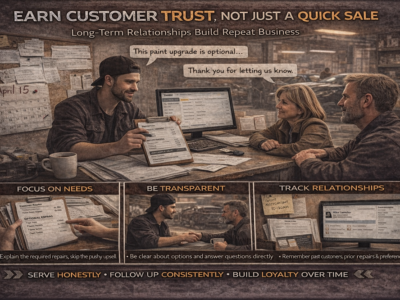
One of the most effective strategies is simplifying language. Reducing technical terms and using general, easy-to-understand descriptions helps customers feel informed rather than overwhelmed.
For example, saying “we’re repairing the side door” is often far more reassuring than using precise technical terms that may confuse or intimidate the customer. Clear, accessible language helps customers understand what is happening and builds deeper trust.
However, improved communication only delivers real benefits when it is consistent.
A single detailed update followed by days of silence often causes more concern than brief, regular check-ins. Customers want reassurance that their vehicle has not been forgotten, even if progress is temporarily paused due to parts delays or insurance approvals. Providing short, understandable, frequent updates helps manage expectations and reduces anxiety. This level of communication is difficult to maintain without the right tools.
Body shop–focused customer relationship management software makes frequent, clear updates far more manageable for your shop to provide by organizing job status, notes, photos, and timelines in one place.
When paired with simple, customer-friendly language, these tools allow shops to keep customers informed without overwhelming staff. By using your software effectively and communicating in a way customers can really get, you can reduce stress, build trust, and position your shop as the clear choice for future repairs for the customer, their families, and their friends.