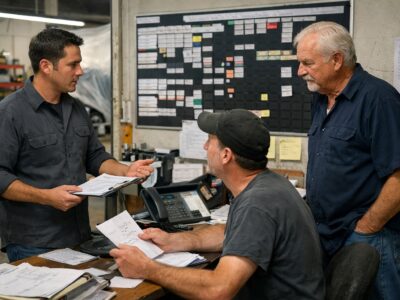
Whether it’s a particularly challenging customer, misplaced paperwork, aging tools, or a cluttered desk, every successful business eventually encounters countless small daily annoyances.
While these issues may seem minor or not worth addressing, even small “papercuts” of wasted time, frustration, or minor damage can compound into significant problems that undermine your entire shop’s efficiency and profitability. For bodyshops and collision repair businesses, these risks are even higher. With three distinct work areas, the repair floor, the customer-facing front office, and the back office, these minor annoyances can compound across multiple locations, affecting your entire team’s focus, morale, and productivity.
Once the costs of these small annoyances are felt, and the grumbling and complaints start to pile up, the key question becomes:
“Which one should I fix first?”
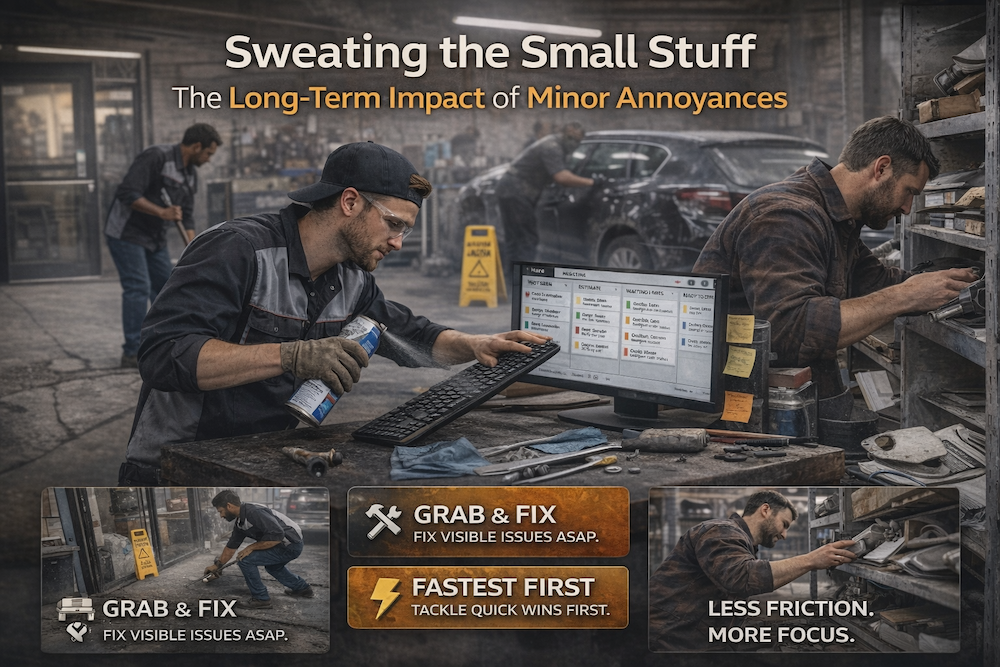
Two practical strategies can help ensure rapid results: grab and fix, or fastest first.
Grab and fix
is exactly what it sounds like: address issues as soon as they are noticed when you walk into the shop tomorrow. For example, a cracked sidewalk at the shop entrance? Patch it immediately. A dripping gutter near the front door? Fix it that day. Slow front desk computers? Start updates or reboots immediately. This approach addresses the most visible issues first, which are likely to be noticed by both customers and employees, improving immediate satisfaction and morale.
Fastest first
focuses on resolving issues that take the least time to fix, even if they are less obvious. For instance, updating software on front office computers may take a few minutes, while resurfacing concrete could take an entire day. Sorting a messy parts pile could take a week, but installing labeled boxes for temporary storage may take only minutes. By piling up quick successes for your team first, you can dramatically reduce the number of small annoyances impacting your shop in the shortest timeframe possible.
No matter which approach you choose, some problems require larger, long-term solutions.
No amount of temporary workarounds can make outdated computers faster, fix a broken inventory system, or restore damaged tools. Identifying these high-impact upgrades allows your shop to prioritize effectively. One of the most critical areas in the modern day to consider is your shop management software. Many of the recurring annoyances in bodyshops, from task assignments, job tracking, payment collection, parts management, and all the way to customer communications, are connected to your overarching shop management system. Upgrading to a modern, bodyshop-specific management platform can address dozens of minor inefficiencies in one step, freeing your team to focus on the repairs and customer service they do best rather than constantly dealing with small frustrations.
By systematically reducing small annoyances through quick fixes and targeted upgrades, your shop gains more time, energy, and confidence, empowering your team to deliver their best work day in and day out.