
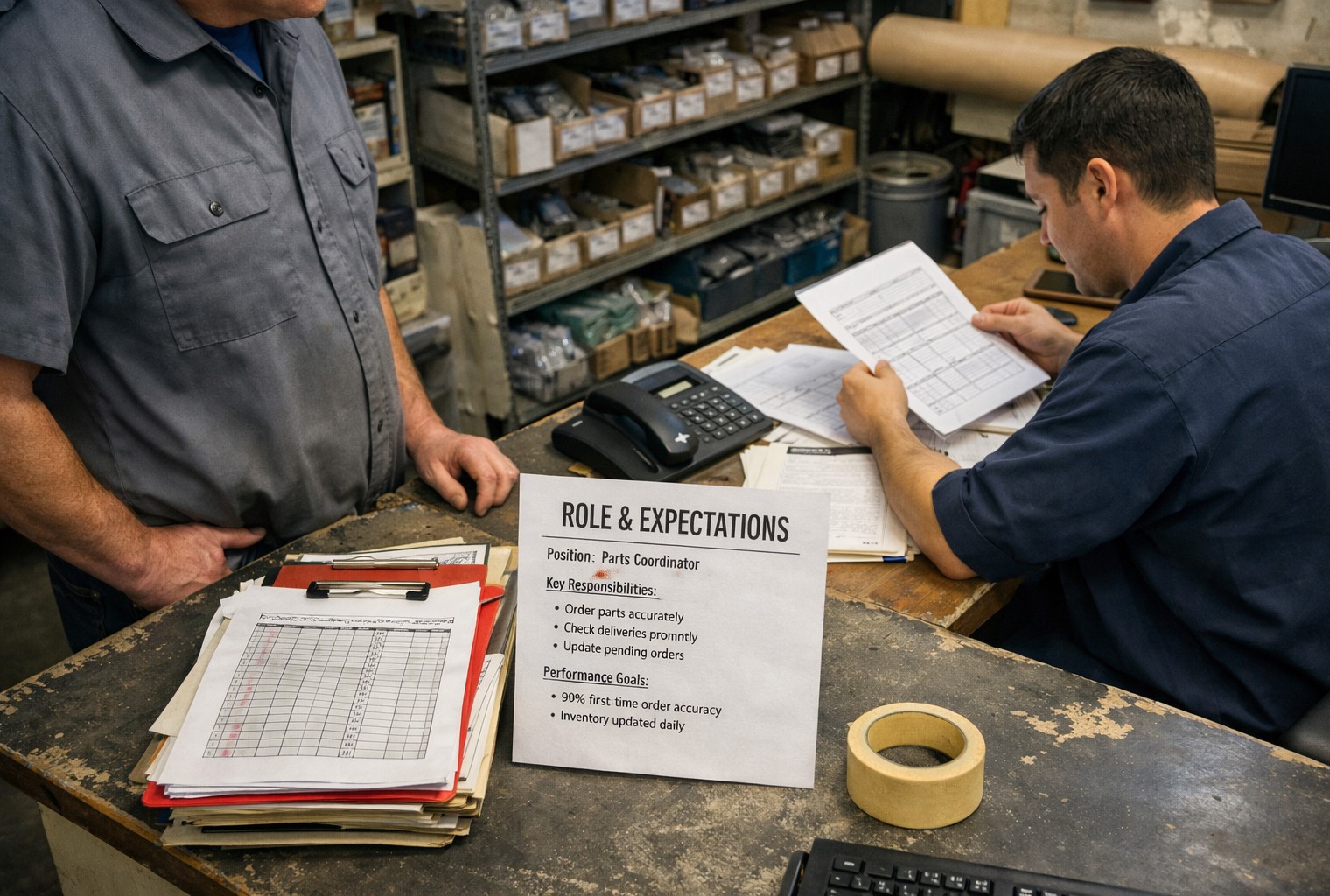
Hiring a spouse, sibling, or adult child can feel like a practical shortcut when the shop is short-staffed and payroll is tight. The risk is not whether they can do the work. The risk is what happens to standards when feedback gets delayed, the paper trail disappears, and other techs start compensating to keep cycle time from sliding.
What tends to change over time is accountability. A production manager can coach a technician, document missed procedures, and escalate if needed. When that technician is the owner’s son or daughter, the sequence often stops at the first uncomfortable conversation. Other employees notice quickly, and consistency fades without anyone announcing a new rule.
This does not mean family employment fails by default. Many stable collision repair auto body shops are family-run across generations. The difference is whether expectations are formalized before conflict appears. Structure protects both the business and the relationship.
Three conditions usually determine whether it works:
-
The family member has a defined role tied to measurable outcomes, such as cycle-time support, parts-coordination accuracy, or customer communication.
-
Performance conversations follow the same process and documentation used for every employee.
-
Compensation aligns with the position’s market value, not the family relationship.
The highest-risk scenario is underperformance in a role the shop depends on, like estimating or production coordination. The owner often sees the gap. The staff sees it sooner. If the correction does not happen, work gets quietly redistributed to maintain harmony, and the strongest employees start looking for a place where standards apply evenly.
Ambiguity feels like conflict avoidance, but it compounds risk. Set expectations early, put the same guardrails on family as everyone else, and your team keeps trust in the system. Structure is not cold. It is protective.

In your shop, what’s the one ‘non-negotiable’ process that must stay identical for family and non-family employees?