
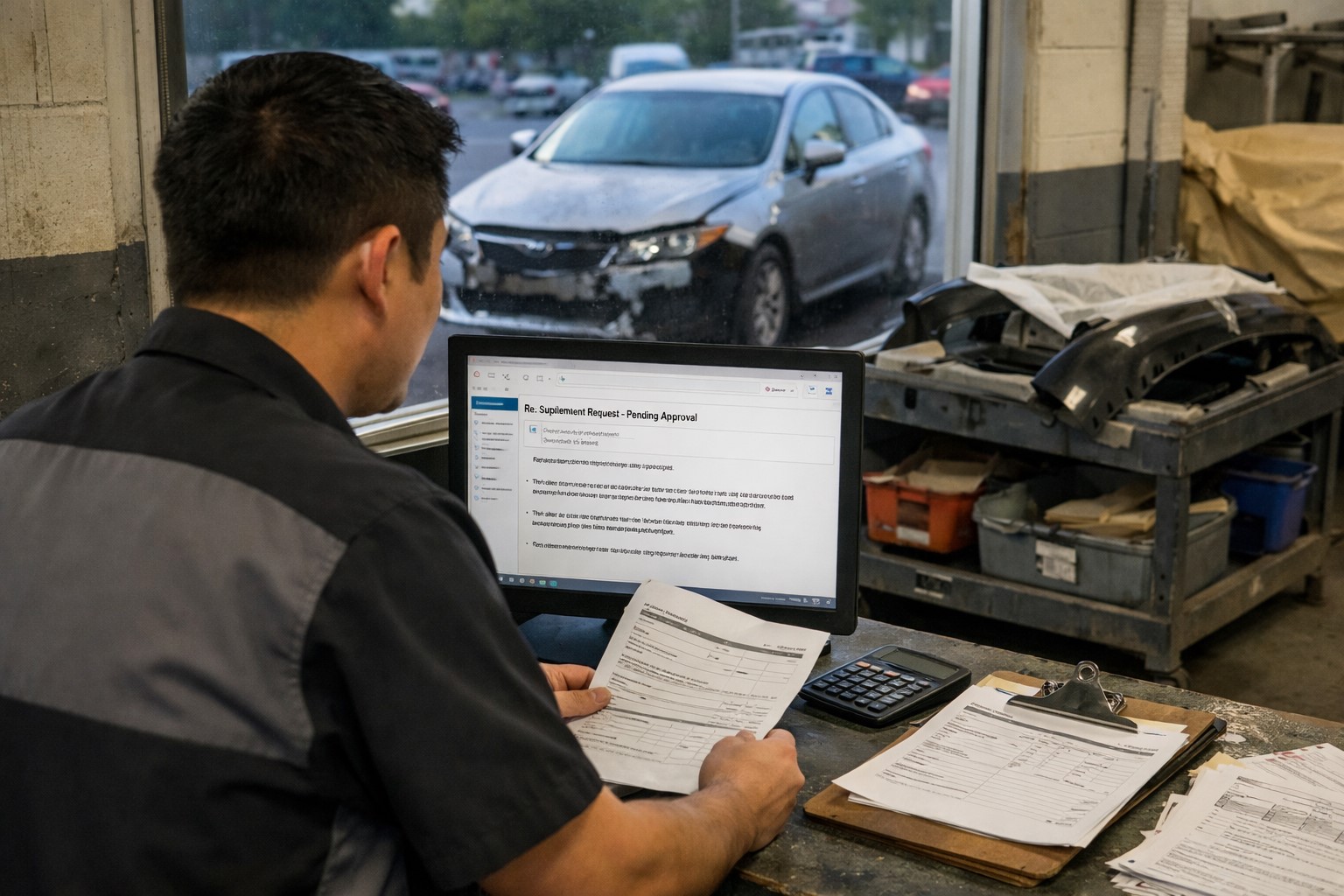
Every collision repair shop has a vehicle that sits longer than it should. Not because the repair is complex, but because someone has not made a decision. The customer has not approved the supplement. The insurer has not responded to the last message. The owner has not returned the adjuster’s call. The car sits in the lot, the bay is partially committed, and production works around it like furniture that nobody wants to move. Over 30 days, that indecision carries a real operational cost.
Deferred decisions are not passive. They consume space, work in progress (WIP) capacity, and administrative attention. A job waiting three weeks for customer approval is not inactive. It gets checked repeatedly, explained to the insurer again, and reviewed every time someone asks about it. None of that effort appears on an efficiency report, yet it pulls time away from jobs that are actually moving.
The pattern usually begins with the absence of an escalation process. When a supplement goes unanswered for five days, what happens next? In many collision repair shops with no defined follow-up cadence, the answer is usually nothing. Another message gets sent, and the job continues to sit.
Without a decision deadline built into the workflow, the vehicle remains until someone eventually forces the issue.
Three decision points that every open repair order (RO) should run on a timer:
- Customer authorization. If no response within five business days of contact, the job should trigger a documented escalation, such as a certified letter, hold notice, or storage fee process, depending on state law.
- Supplement response. If the insurer has not responded within seven business days, the next contact should come from a different person or at a different level inside the insurer’s organization.
- Owner decisions: Any job requiring owner input that remains unresolved for 48 hours should appear on a daily flagged list instead of sitting inside someone’s inbox.
A 30-day delay is rarely caused by one moment of inaction. It is usually a series of smaller delays that feel reasonable individually but compound into a month.
A deadline structure inside the repair order workflow does not force bad decisions faster. It forces the decision to happen at all, which is usually the real operational bottleneck.
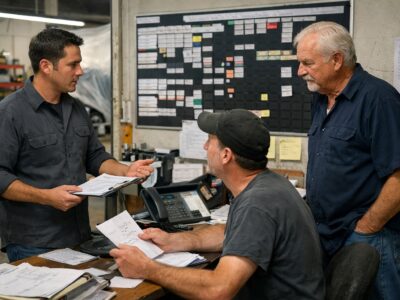


For shop owners: How many vehicles are currently sitting in your collision repair shop waiting on a decision, not a repair?