
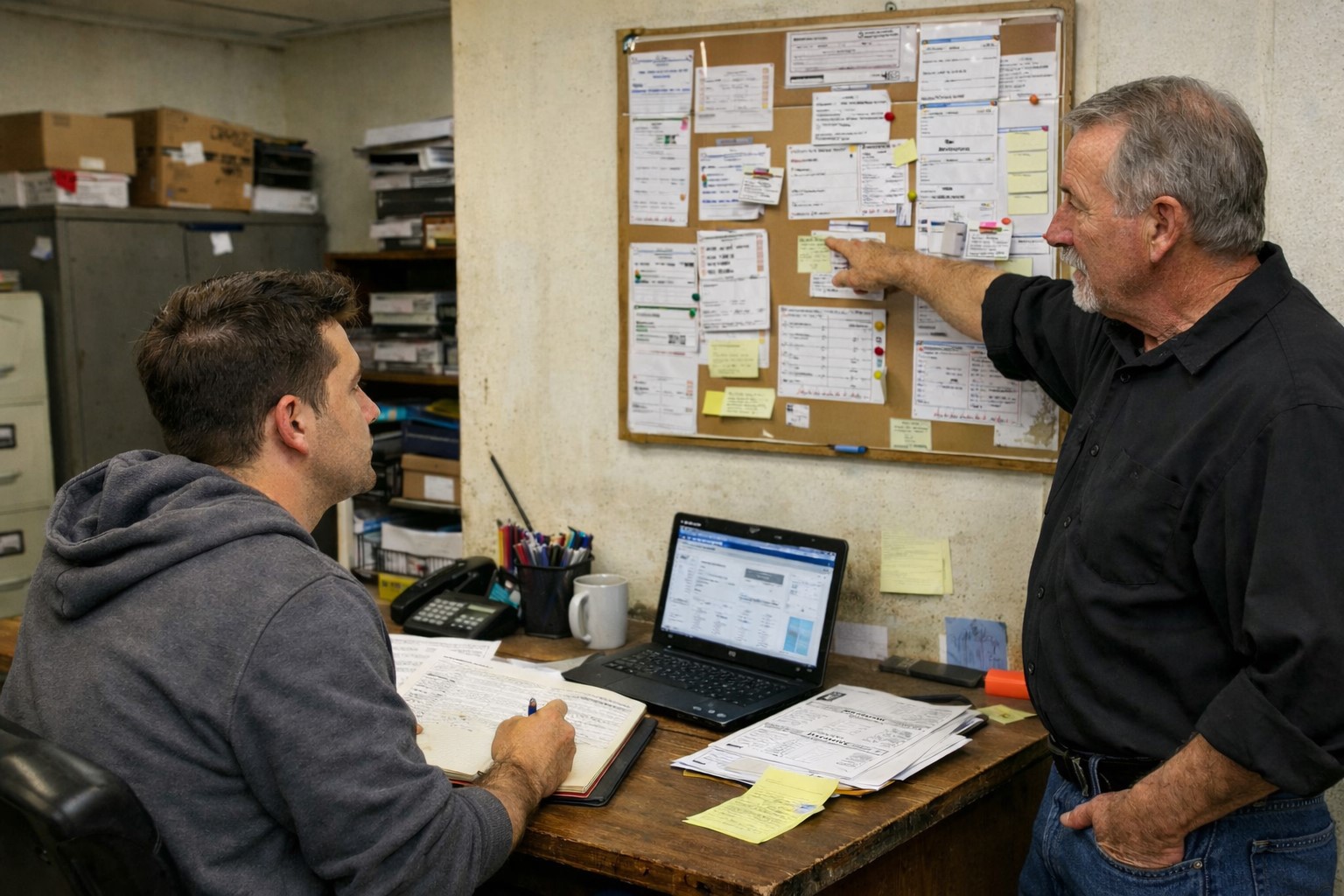
In a previous discussion about family succession in a collision repair shop, we looked at a common assumption: if the next generation can run the technical side of the operation, the transition should work. In practice, the technical work is rarely where the difficulty appears. The real problem tends to surface once ownership begins to change.
Many collision repair businesses run for decades on shared memory rather than documentation. Pricing decisions happen over coffee. Vendor contacts live in one phone. Employee pay structures are understood but rarely written down. As long as the same owner manages those relationships, the system works because everyone remembers how things operate.
The moment a transition begins, that informal structure becomes a risk.
The problem appears quickly during a hand off. The successor inherits a functioning collision repair shop but not the institutional memory that kept it running. Supplier terms may exist only in past conversations. Key accounts may depend on a personal relationship that was never recorded anywhere. Even internal policies, such as how supplements are negotiated or how cycle time priorities are set, may exist only as habits developed through years of experience.
A successor does not just need ownership authority. They need operational clarity.
That clarity comes from building a map of how the business actually runs. Document the reasoning behind pricing decisions, not just the numbers themselves. Write down key account contacts, the history of those relationships, and any informal expectations tied to the work. Capture employee compensation structures, bonus arrangements, and any verbal commitments that have shaped the workplace over time.
Most owners are surprised by how much of the collision repair shop operates on instinct. The business can feel organized until someone attempts to explain every decision point on paper. That exercise often reveals how much knowledge sits inside one person’s experience rather than inside the company itself.
Vendor and supplier relationships deserve particular attention. Parts pricing, delivery expectations, and credit terms are often built on long-standing verbal agreements. Those arrangements may have worked for years because of trust with the founder. A new owner does not automatically inherit that trust unless the agreement is documented and confirmed before the transition.
A few documentation priorities tend to stabilize the process:
- Record pricing logic and labor rate decisions, including how materials, sublets, and markups are handled.
- List key customer and insurance contacts with context about how those relationships developed.
- Document employee pay structures, bonuses, and any standing agreements that affect compensation.
- Confirm vendor pricing and credit terms in writing before ownership changes.
The documentation work can feel tedious, but it exposes operational blind spots. Collision repair shops often discover inconsistent pricing, unclear vendor expectations, or informal employee arrangements that were never formalized. Once the collision repair shop is written down, it becomes transferable.
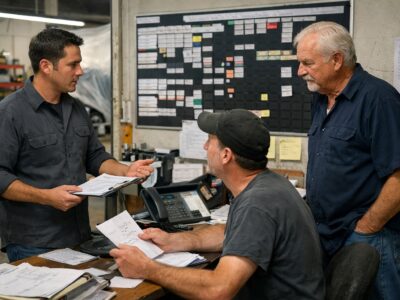

Curious how other collision repair shop owners handle pricing logic.
Are your estimating rules documented somewhere, or mostly experience-based?