The Problems That Didn’t Go Away
By 2026, many shop owners expected parts delivery to return to normal. It has not.
Auto parts suppliers remain less efficient than before COVID. Parts that once arrived in 2 to 3 days now often take 5 to 7 days. Some specialty parts, especially electronics and safety sensors, still take 10 to 14 days or longer.
Several issues continue to affect the supply chain.
1. Chip Shortages Keep Returning
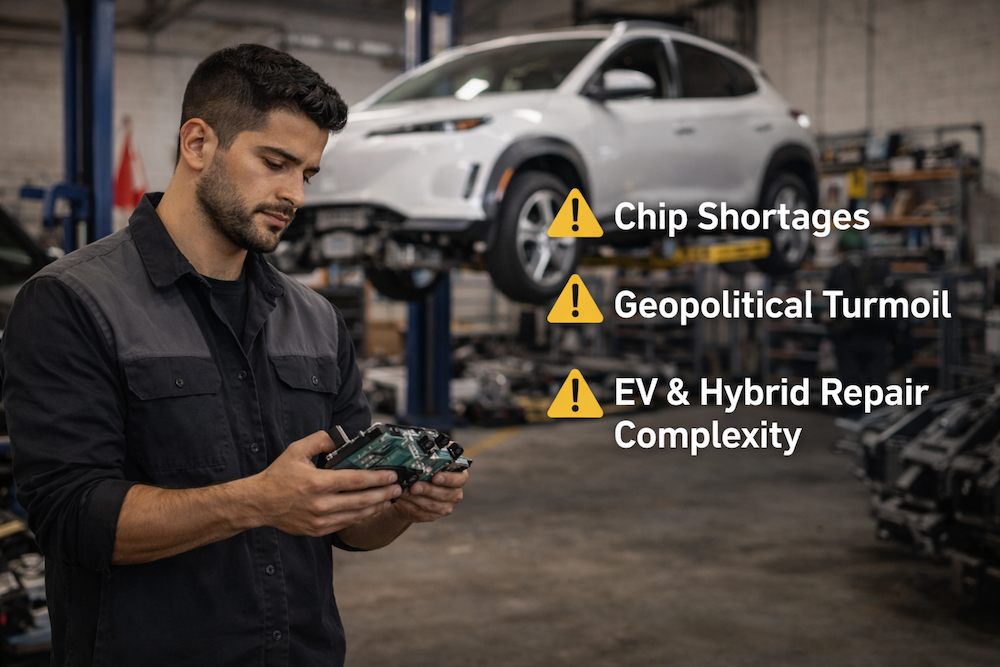
The main chip shortage has eased, but new shortages still happen. In late 2025, disputes involving major chip suppliers disrupted production at several automakers. These chips are used in control modules, airbags, sensors, and lighting that collision shops need for repairs. Industry groups continue to warn that electronic parts may remain hard to get in 2026.
2. Ongoing Geopolitical Disruptions
Global conflicts and trade tensions still affect parts supply. The war in Ukraine disrupted production of wiring harnesses and small motors, forcing manufacturers to move production to new factories, which took months. Many OEM collision parts sold in the U.S. are still made overseas, so tariffs and trade disputes can raise costs or delay shipments with little warning.
3. EV and Hybrid Growth Adds Complexity
EV sales slowed in late 2025, but hybrid repairs increased sharply. Hybrids and EVs rely on batteries, electric motors, sensors, and high-voltage components. These parts are harder to source, take longer to ship, and add uncertainty to repair timelines.
4. Manufacturing Labor Shortages
Manufacturing plants have fewer workers because many experienced employees left during COVID and did not return. At the same time, fewer younger workers are entering manufacturing jobs due to health concerns, burnout, early retirement, and better-paying or more flexible work in other industries. This leaves factories short-staffed even when demand for parts is high.
What Shops Should Expect in 2026
Shops should expect fewer repairable claims, but each repair will be more complex. Parts prices are likely to stay high, especially for electronic and ADAS components, which will continue to cause the longest delays.
While inventory levels may slowly improve, parts suppliers will charge more because storing and managing extra inventory costs more than the old just-in-time system.
Key Takeaway
The supply chain is not returning to 2019 conditions. Parts will continue to arrive more slowly and cost more.
One clear action shops can take now is to order parts as soon as the estimate is approved and schedule drop-off based on parts availability, not customer convenience.
This single change reduces dead bay time and avoids repairs sitting idle.