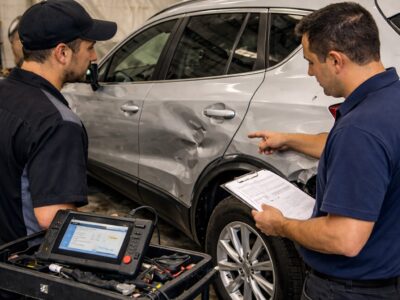

A customer’s car has been in your collision shop for nine days. You worked on it twice. The rest of the time, it sat waiting for parts.
This is now the main reason repair cycle times hit 17+ days. Every extra day costs bay space, cash flow, and customer trust.
What is hiding under your eyes?
Most auto body shops still follow this pattern:
-
Car drops off
-
Estimate is written
-
Insurance approves
-
Parts are ordered
-
Parts arrive days later Repair finally starts
Result: the car sits in your bay for a week doing nothing.
If a bay costs $75 per day, a car waiting nine days burns $675 in overhead. Multiply that by a few jobs each month, and you are losing $1,500–$2,000 in dead bay space.
This workflow made sense when many parts arrived in 2–3 days. Today, common parts often take 5–7 days, and specialty or ADAS components can take 10–14 days or longer. The supply chain changed. Most body shop workflows did not.
The Real Cost of Waiting
When a $4,200 repair sits for nine days, it costs you:
-
Adding pure overhead for a bay doing nothing
-
Lost revenue from 2–3 jobs that could have been completed
-
Technician morale, as stalled work piles up
-
Cash flow, with labor invested but nothing billed
The Fix: Order Parts Before Drop-Off
The best shops change the order of how repairs happen:
-
Check parts availability during the estimate
-
Stage parts, not cars
-
Tell customers the truth upfront
-
Track vendor delays
The Payoff
Cutting parts wait time can drop cycle time from 12 days to 7. Even small gains in cycle time can translate into meaningful annual revenue, using the same bays and the same team.
How to self-evaluate your current parts planning efficiency?
-
Pull your last 30 completed jobs
-
Measure days from customer drop-off to first repair activity
-
Identify the cause of each delay
-
Calculate how much of the delay was parts-related
If a large part of the delay comes from waiting on parts, your parts planning is slowing the shop down. These delays are not going away. Shops that plan repairs around parts availability move cars through faster than shops that wait and react.