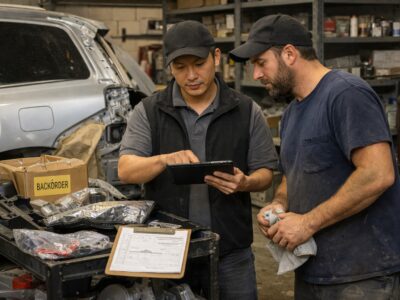
When a vehicle is torn down, hidden damage is found, the repair order (RO) changes, and approval does not come back quickly, the collision repair shop loses more than time on one job. It loses production continuity. The stall stays occupied, parts staging pauses, and the production board starts bending around uncertainty.
That is why supplements are not just estimated corrections. They are operational events.
Most collision repair shop owners look at delays and focus on technician efficiency, stall usage, or parts lead times. Those matters. But in many collision repair shops, the bigger drag starts earlier. A technician can only keep moving when the next repair step is approved, documented, and supported by the right parts decision.
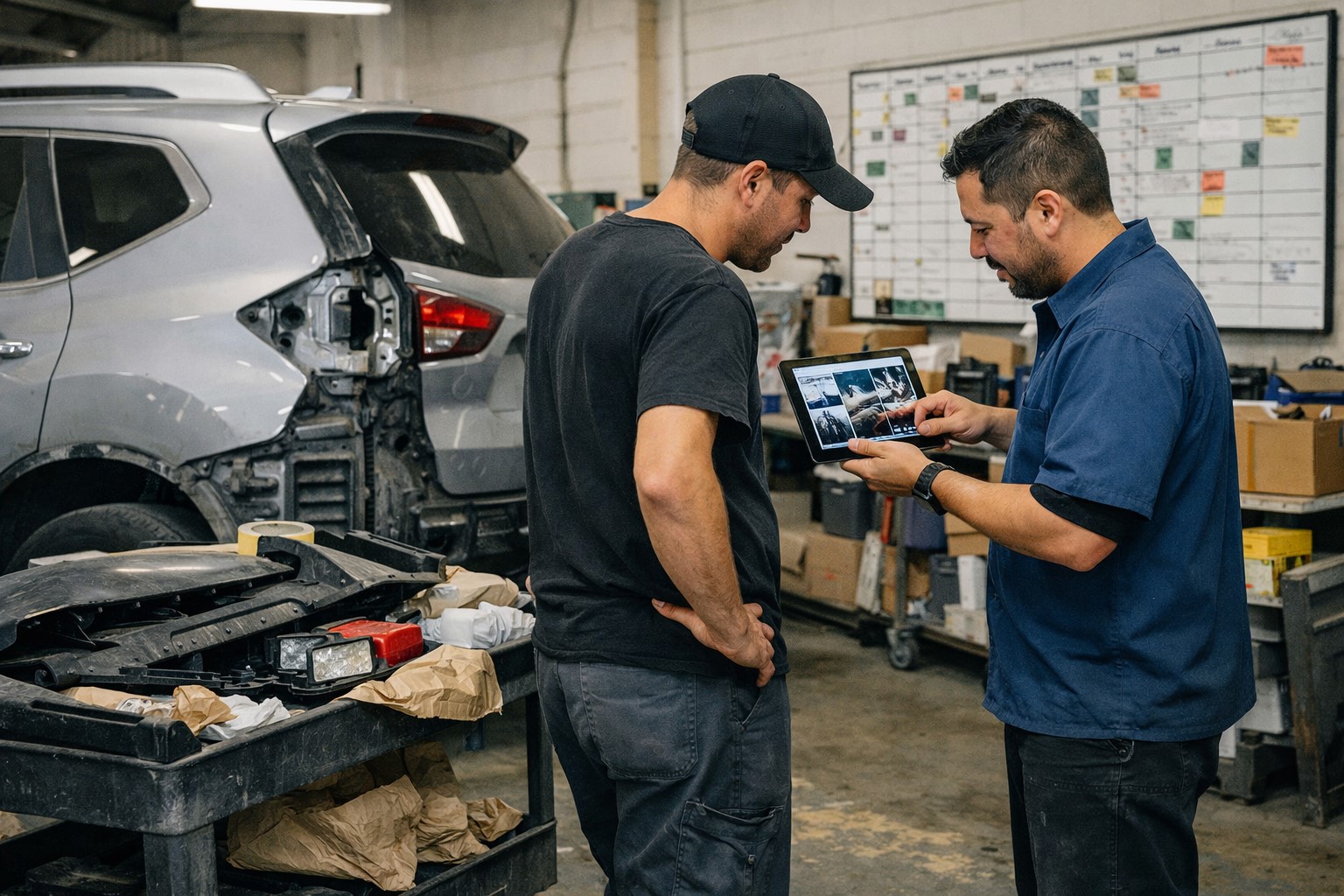
The real cost is stop-start production. A technician tears down the vehicle, adds damage that is documented, takes photos, and the supplement is submitted. Then the job waits. While it waits, the stall is still tied up; another vehicle may get pulled in out of sequence, and the team starts reshuffling around work that should have kept flowing.
That kind of interruption costs more than a simple delay. It creates repeated setup time, context switching, parts re-checking, customer update pressure, and front-office follow-up that spreads across multiple repair orders. One slow supplement does not just hold one car. It distorts the whole repair pipeline.
The fix is not fewer supplements. Supplements are part of collision repair. The fix is faster supplement handling with a standard process:
- same-day damage documentation after teardown
- clear photo and estimate revision requirements
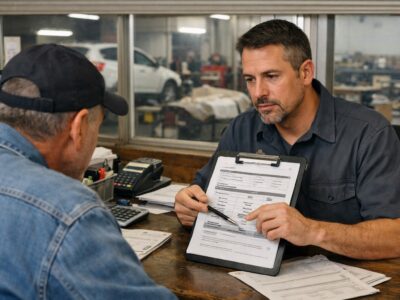
- defined handoff between the technician, the estimator, and the front office
- fast customer or payer communication when the timeline changes
A collision repair shop can survive a few slow moments on the floor. It struggles much more when work keeps pausing between damage discovery and approved next steps. If the shop feels busy all day but cars are not moving through, measure the supplement timeline before blaming the technician’s speed.