
On a normal Tuesday, you can have a full schedule, a technician flagging hours, and estimates approved, but the bank balance still feels tight. That usually means the labor rate is below your real operating floor. When the posted rate is set by copying nearby shops, it can look competitive while quietly underpricing your own overhead.
Most shops set labor by checking competitor rates and landing somewhere in the same range. That method tells you what the market is used to, but it does not tell you if the number covers your cost to operate. If overhead has grown faster than the rate, you can lose margin on every billed hour even when the calendar stays booked.
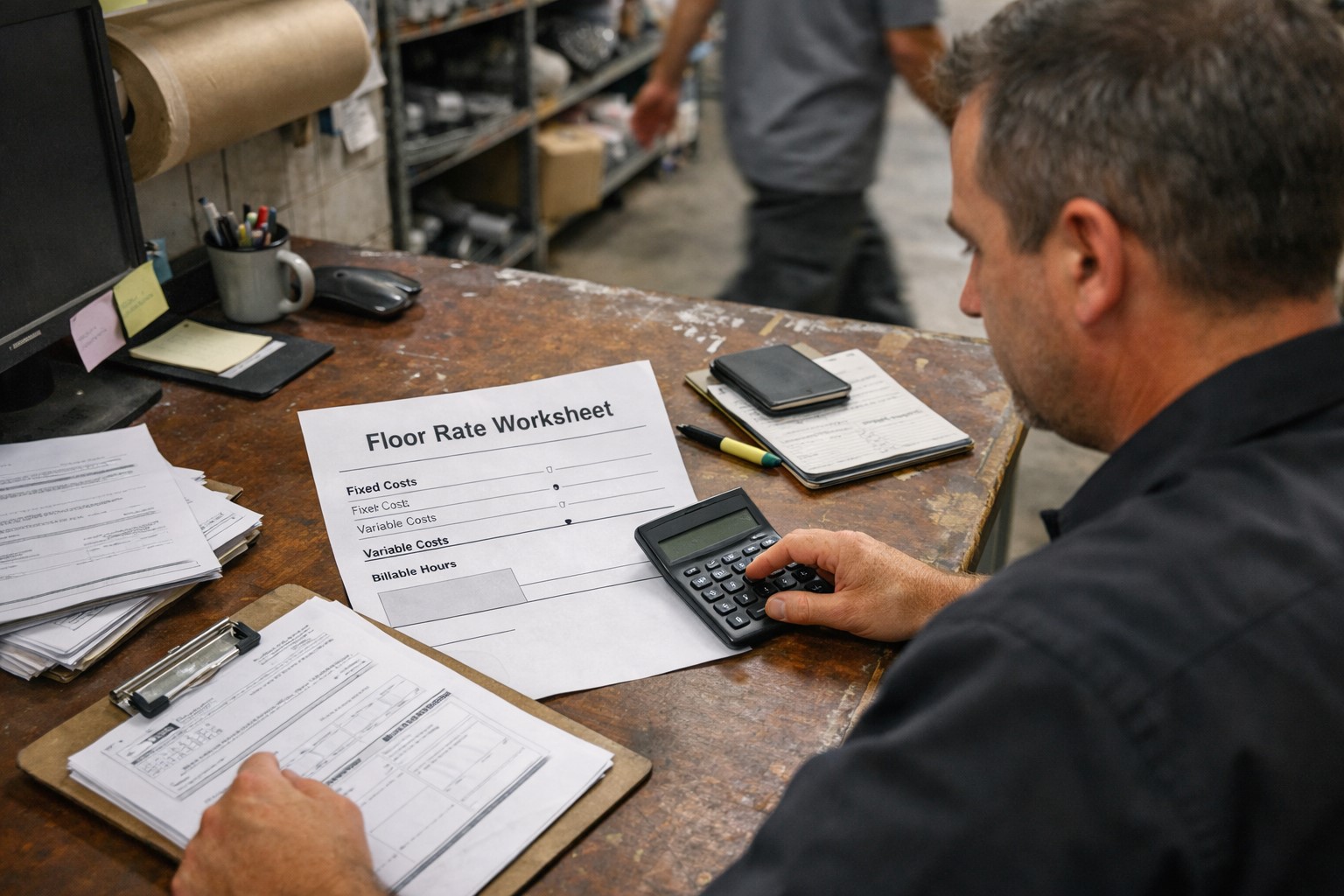
To find your true floor, start with fixed monthly costs: rent or mortgage, utilities, insurance, equipment payments, software, and administrative payroll. Add variable costs at your average monthly volume, including materials, supplies, and sublets. Then divide that total by the realistic number of billable hours you produce per month, not the theoretical maximum. The result is your break-even overhead rate per hour, before technician pay and profit are even considered.
Most owners who run this calculation for the first time discover the floor rate is higher than the posted rate. Not because they were reckless, but because costs compound while rates often move slowly. Material costs jumped post-COVID. Technician pay climbed to retain qualified people. Rent renewals and insurance moved up. Each increase felt manageable on its own, and the rate never fully caught up.
Two common reasons shops avoid updating the rate:
-
Fear of losing Direct repair program (DRP) standing, even though many DRP agreements allow more flexibility than shops assume, especially on non-DRP work
-
Assumption that customers will push back, when a $5 to $10 per hour change is rarely the deciding factor versus trust, timeline, and repair quality
The labor rate is not a marketing decision. It is a financial floor. If you do not know your floor rate, you cannot tell whether your current rate is protecting the business or slowly bleeding it.



Quick check: when you divide total monthly overhead by realistic billable hours, how far off is your current posted rate?