You can order the same fender from the same vendor and still pay more because suppliers price to risk and predictability, not to equality.
It’s not fairness. It’s how you look as a buyer.
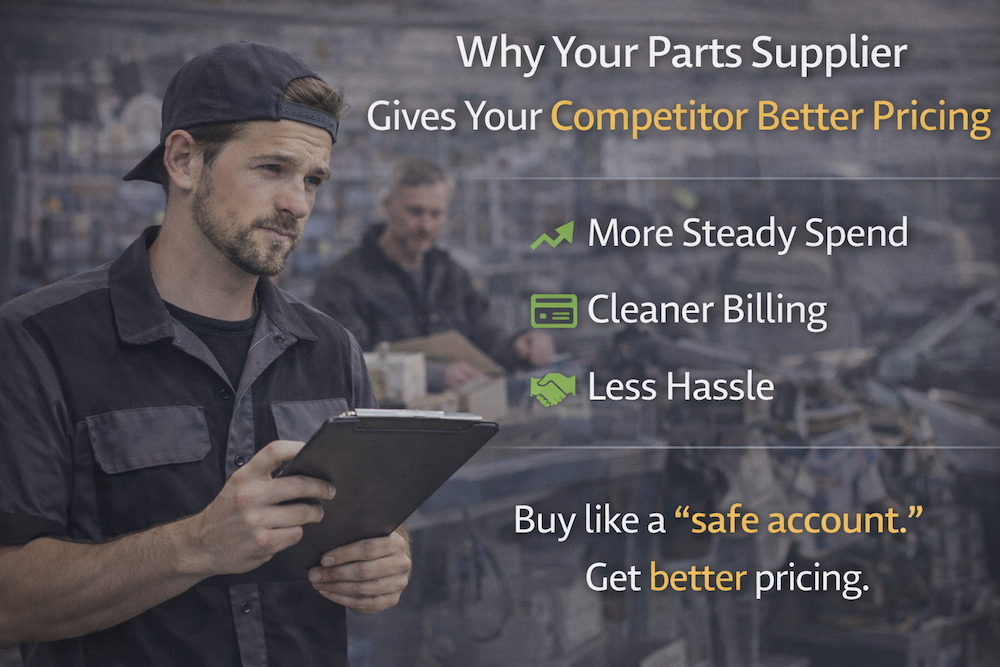
If your collision repair shop looks steady, easy to deal with, and quick to pay, you become a “safe account,” and pricing tightens up over time. If your spending is scattered and your orders feel random, you look expensive to support, so your price quietly includes that risk. This is why two shops in the same town can see two different numbers on the same part.
This matters because the cost is one of the few levers you can pull without hiring, changing your labor rate, or adding bays. A small improvement shows up immediately in the margin and cash flow. It also reduces friction when you need a favor, like a rush order or a backorder workaround, because vendors prioritize accounts they trust.
In the current reality of delays, returns, and insurer timing, being the account that vendors choose to help is operational advantage.
What creates the price gap
Suppliers respond to four signals: how much you buy, how reliably you buy, how clean you pay, and how much trouble you create.
A shop that sends consistent volume and has fewer billing issues costs less to support, so discounts and priority appear.
A shop that switches vendors constantly, argues every invoice, or stretches terms becomes a higher-effort account. The supplier does not call it a penalty. They just stop giving the best numbers.
How to approach this without turning it into a fight
Go in with a trading mindset: you’re offering stability in exchange for better pricing.
-
Bring a simple spend summary: last 60–90 days total with them, plus your average monthly spend.
-
Ask for their rules, not their sympathy: “What monthly spend or payment pattern earns the next pricing tier?”
-
Offer a short trial: “If I send most orders to you for 30 days, can we lock tier pricing during the test?”
-
Protect cycle time: keep one backup vendor for emergencies so consolidation doesn’t create downtime.
A good relationship gives you a good supply chain, and a good supply chain gives you good business.