The Mindset Shift Most Collision Repair Shops Haven’t Made Yet
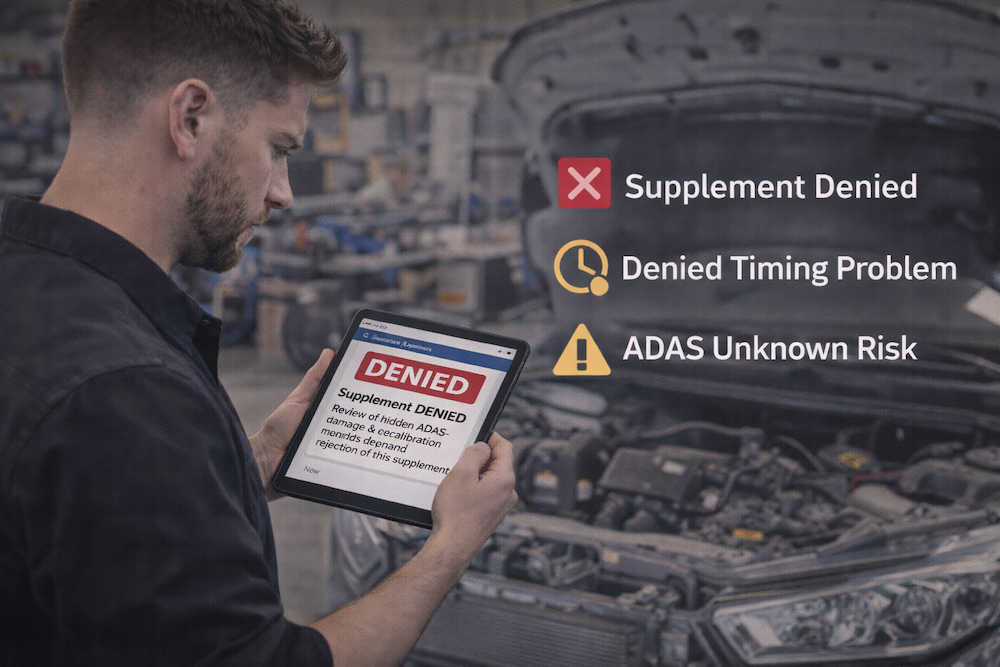
You find hidden damage during teardown. You document it. You submit a supplement. Insurance denies it.
This feels unfair because, for decades, this exact process worked. The work was real. The damage was real. Approval usually followed. So when denials increase, the instinct is to blame insurers, adjusters, or tighten policies.
What Is Going On?
About 60–65 percent of collision repairs now require at least one supplement, up from roughly 30 percent a decade ago. This shift reflects how much more complex vehicles and repair requirements have become.
Supplements are not being denied because the damage is questionable. They are often denied because insurers now judge whether known unknowns were identified early.
In the past, an approved estimate was treated as complete, and hidden issues found later were accepted as normal exceptions. That worked when most damage could not be confirmed until teardown.
Today, insurers expect a deeper inspection up front. Tools such as pre-scans, diagnostics, and calibrated assessments can reveal many issues before repair begins. When a supplement arrives later, it looks less like discovery and more like a missed opportunity to identify the work earlier.
ADAS Turned Hidden Damage Into a Timing Problem
Insurance no longer assumes uncertainty is unavoidable. Modern vehicles carry ADAS components where damage is rarely visible and often cannot be confirmed without disassembly. When supplements tied to sensors, brackets, or calibrations arrive after repairs begin, they resemble scope expansion rather than discovery. The same damage, framed upfront as unknown ADAS risk, is judged very differently than when it appears later as an added requirement.
This is not only about ADAS. Modern repair tools allow deeper inspection earlier in the process. Scanning, OEM procedures, and diagnostic checks reduce what insurers consider “unknown.”
From their perspective, late supplements create two problems. They increase cost after approval, and they weaken predictability. That makes them harder to justify internally, even when the damage is real.
This creates a trap for owners. It feels like you are being punished for doing thorough work. In reality, the issue is timing, not effort.
The Mindset Shift Is Crucial
Teardown is no longer “work after approval.” It is how you confirm what the job actually involves. Until teardown is done, the estimate is a best guess, not a final number, even if it looks complete on paper.
What used to be a supplement problem is now a sequencing problem. Once owners see that, the solution stops feeling like extra work and starts looking like risk control.
That perspective change is where denial rates actually drop.