You opened a second collision repair location, and it’s growing. But your original body shop, the one that ran clean for years, suddenly feels unstable: cycle time stretches, comebacks creep up, and your best tech quits.
The slowdown you didn’t plan for
This happens because you were part of the operation. When your attention leaves the building, problems that used to get corrected in real time now stack up across departments and show up later as delays, rework, and customer friction.
What tends to break first
The first body shop usually doesn’t fall apart from one big mistake. It drifts. The lead estimator you relied on is now launching the second collision repair location, so blueprinting quality drops and supplements get messier.
The informal “ask the owner” decisions don’t get answered fast, so parts staging and scheduling lose rhythm. Work in progress (WIP) becomes harder to see, and you only notice when delivery dates slip or the front office gets pinned by update calls.
The real cause is missing ownership
Multi-location only works when every critical lane has a named owner inside each collision repair shop. Not a helper. Not “whoever is free.”
A person with the authority to make calls and be accountable for outcomes. When ownership is unclear, the work still gets done, but it gets done late, inconsistently, and with more touch time lost to re-checking.
What to lock down before you “fix everything”
Before you start changing ten things at once, lock down a small set of controls that make the first body shop run the same way even when you’re not on site.
Think of it like a shared operating setup: clear owners, consistent checkpoints, and a single daily view of what’s moving and what’s stuck.
- A lead with real authority: one person owns scheduling, quality gates, and customer escalations, with clear handoff rules.
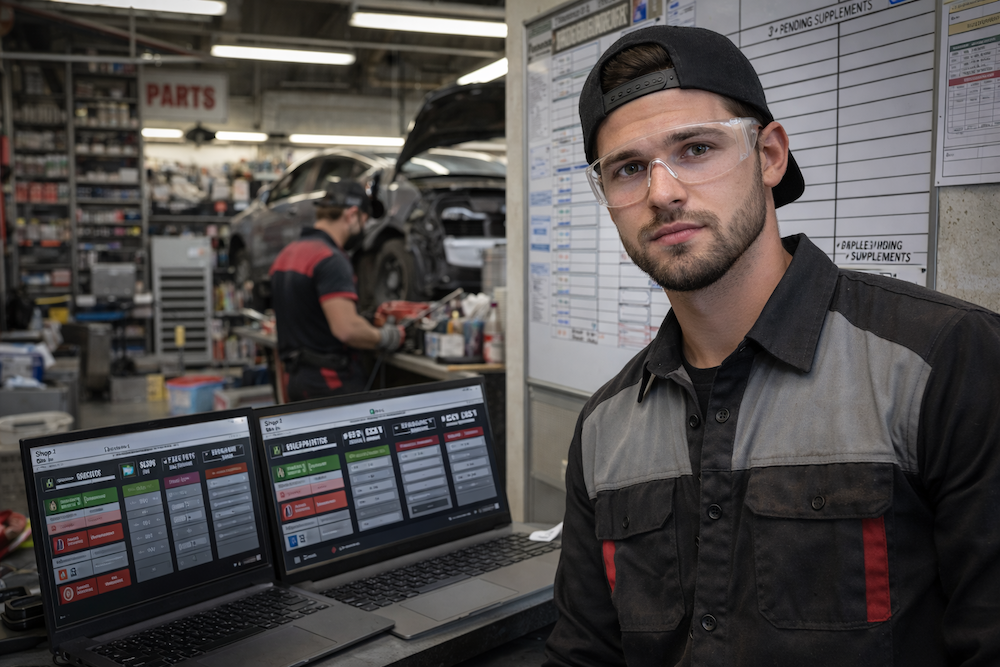
- One front-end routine across both locations: teardown, blueprinting, parts ordering, and supplements follow the same checkpoints every time. A single daily view of the work: one place where both collision repair locations can see WIP, stalled jobs, parts status, supplements pending, and “ready to deliver,” updated daily.
- Stable teams by location: avoid routine staff bouncing; when a transfer is required, it’s planned, logged, and temporary.
Key takeaway
A second collision repair location doesn’t break the first body shop. The lack of clear, local ownership does. A single operating command chain: clear owners, consistent checkpoints, and real-time visibility into WIP and constraints. When those are present, the first body shop stays stable even when you are not physically there.