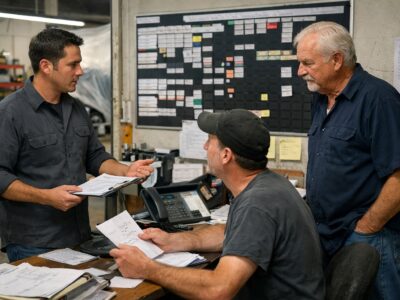
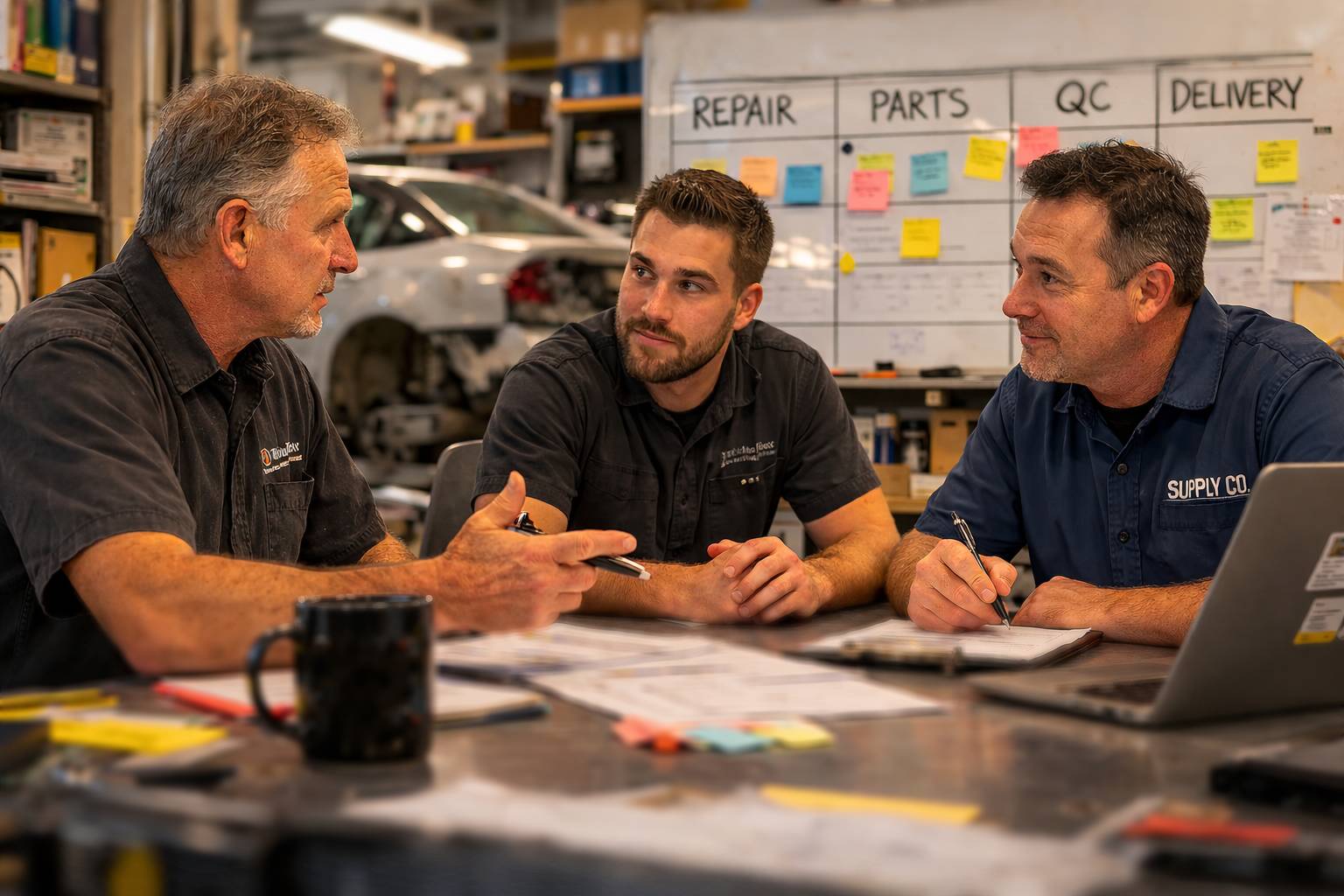
Most collision repair shop owners preparing a family handoff spend years making sure their child can run the technical side of the business. They learn how to read an estimate, manage blueprinting, run a production meeting, and coordinate parts orders. By the time succession becomes a real conversation, the operational knowledge is usually in place. That is rarely where a transition breaks down.
The failure point is usually invisible: the relationships that live in the owner’s head. The insurance adjuster who answers because of a fifteen-year history. The supplier who extended net-60 terms during a slow quarter. The fleet account that sends steady work because the owner handled a difficult claim fairly years ago.
These connections sit outside the formal repair order system, but they quietly stabilize cycle time, parts flow, and incoming work.
Most of those relationships are personal rather than contractual. When the owner steps back, they do not automatically attach to the business entity.
Transferring relationships requires deliberate exposure long before ownership actually changes.
Bring the successor into real operating conversations. Vendor calls, insurer negotiations, and customer discussions should include them well before the official transition. Introduce them as the person who will eventually run the collision repair shop, not as someone helping temporarily. Over time, those conversations allow the industry network around the collision repair shop to rebuild familiarity with the next operator.
Credit terms often require separate planning. Many suppliers extend favorable terms based on the owner’s personal payment history or credit profile. If the business changes hands without preparation, those terms may reset or tighten, which can strain cash flow during the transition period.
Parts delays, rising material costs, and already thin margins make that moment risky if credit lines shrink unexpectedly.
A few early checkpoints reduce that risk:
- Introduce the successor to key vendors and insurance contacts at least one year before the transition
- Allow them to lead routine supplier or adjuster conversations while the owner is still present
- Review vendor credit terms to determine what is tied to the owner personally versus the company
- Gradually shift responsibility for relationship maintenance to the next operator
Technical skill transfers quickly because it lives inside the collision repair shop. Reputation and trust transfer slowly because they live in the industry network around it.
The practical action is simple: start the relationship hand off earlier than the ownership hand off.