In many collision shops, the first hour of the day is the least productive hour of the entire schedule.
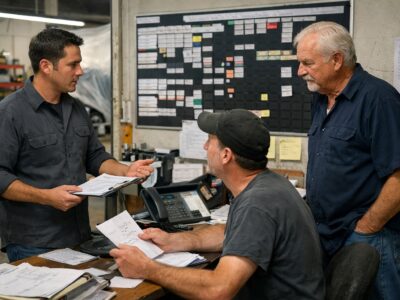
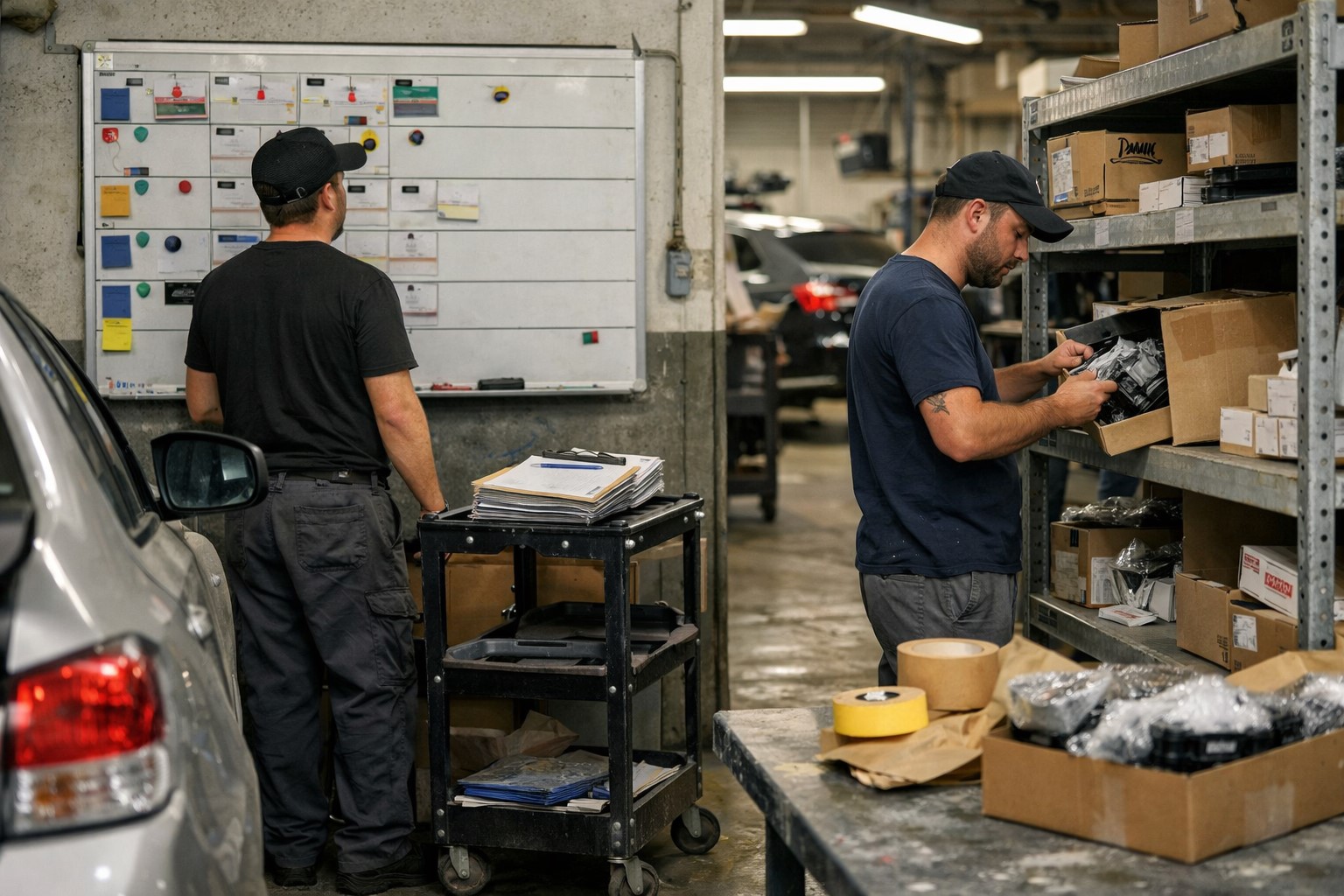
Technicians clock in, walk to their bays, and spend the first 30 to 45 minutes figuring out what they are working on. They check the production board, wait on parts that were not staged, and ask questions about jobs that were not communicated from the previous day. By the time real touch time begins, a meaningful portion of the morning is already gone.
That lost time rarely appears on any report.
When assignments are not posted before the shop opens, the first hour becomes an informal production meeting spread across the shop floor. Instead of one coordinated plan, six different conversations happen at once. Each technician is solving the same planning problem independently.
Across multiple technicians and every working day of the year, that time compounds.
The solution is a short production review that happens before technicians arrive. This meeting can occur late in the afternoon or early in the morning before the shop floor opens. It does not need to be formal. It simply needs to answer three questions for every active repair:
- What stage is the vehicle currently in
- What does it need today
- Are the parts staged and ready
When those answers are already posted before technicians clock in, the start of the day changes immediately. Technicians can begin work instead of searching for direction.
Two habits make the morning review work:
- Parts staging happens the afternoon before, not the morning of. Any part that is not confirmed and physically in the bay or on the parts shelf by the end of the day should be flagged before the next shift begins.
- The production board is updated at the end of the day, not the start. Looking at yesterday’s board in the morning forces technicians to begin with outdated information.
The first hour sets the pace for the rest of the day.
Shops that run a clean morning handoff consistently produce more touch time without adding staff or extending hours. The capacity was already there. It was simply being spent on figuring out what to do next.