
By: Arthur Roseberry
In collision repair, getting the most money out of a customer today is not always the best move.
When most businesses learn how to sell directly to customers, they are taught to upsell. The idea is simple: get the customer to spend as much as possible during the visit in front of you today. That approach makes sense in a lot of industries; the more a customer buys today, the more profitable that interaction becomes for sure, right now.
But body shops do not work like most businesses. Collision repair is not like selling food, clothes, or small impulse purchases. Most customers are not coming in often, and they usually are not coming in happy. They are stressed, unsure of the process, and often know very little about what actually needs to be done to repair their vehicle properly. That changes how selling should work in your shop. A body shop that does honest work and treats people fairly can turn one good repair into years of repeat business and referrals. In this industry, long-term trust carries far more value than squeezing a little more money out of a single visit.
The real question is: how do you get this customer to come back to your shop next time?
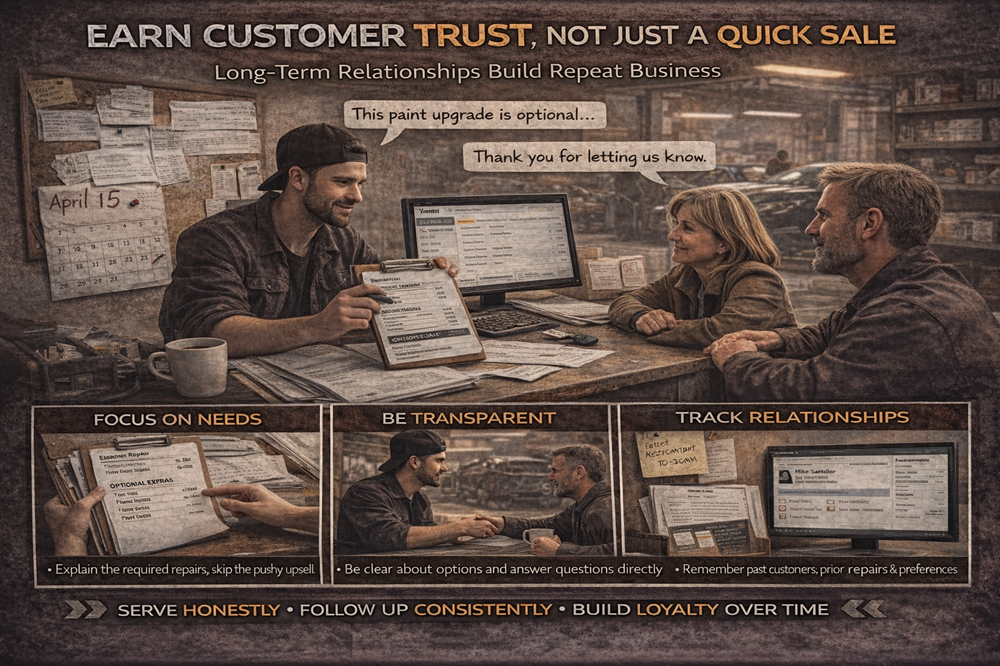
Instead of asking how much more you can sell today, ask yourself what this customer actually needs right now, and what kind of interaction will make them trust your shop enough to come back when they need repairs again. That changes the way you talk during the estimate. It changes the way you explain repairs. It changes the way you present optional work or additions to the job. If something needs to be done for the vehicle to be repaired safely and correctly, say that clearly. If something is optional, make that fact just as clear rather than burying the fact that it is ‘optional’ in the fine print. If a customer does not need or cannot afford extra detailing, upgraded refinishing, or other add-ons today, do not push it just to make a little more on today’s ticket. Customers remember when they are being sold to. They also remember when someone is straight with them about what they truly need.
That honesty is what turns one repair into repeat work and referrals.
A customer may not know whether your sanding process was better than another shop’s. They may not even understand most steps of the structural repair. But they do understand whether they felt pressured and confused, or listened to and taken care of. A shop that is known for being clear, honest, and fair becomes the place customers always come back to after the next accident. It also becomes the place they tell their friends and family about when someone asks where to go. That kind of reputation is worth much more than the extra money made from pushing every possible add-on on a first visit.
The next step is making sure your shop remembers that customer when they come back.
Building trust is only half of the job. The other half is actually using that relationship well when the customer returns. This is where specialized collision repair software matters. If your team can quickly pull up previous jobs, contact details, vehicle information, and even insurance or payment preferences, then the customer does not feel like they are starting from scratch. They feel remembered, and like they matter to your team and shop. That helps reinforce the trust you built the first time and ensures the previous downselling will pay for itself again and again. Without those systems, however, even a loyal customer can end up feeling like just another name at the front desk.
A body shop grows stronger when it treats building trust as the job, not just the repair itself.
If you want full bay years from now, the goal cannot just be making the most money possible from the customer standing in front of you today. The smarter move is to be the shop that people trust enough to come back to, and confident enough to recommend to others. Shops that understand that will build stronger customer relationships, steadier referral business, and a better reputation over time than shops that treat every estimate like a chance to squeeze out one more item on a sale.

Collision repair is one of the few industries where trust often matters more than maximizing the ticket today. How many shops are thinking about the next repair relationship instead of just the current estimate?