
By: Arthur Roseberry
Accounting in a body shop is never as simple as money in and money out.
Every established business has to keep track of its financial activity. Sales, purchases, payroll, supplies, and equipment all need to be recorded properly. All industries deal with accounting in some form, but collision repair shops face a much more complicated version of the problem.
A body shop is not just selling one product or one service. Every repair job can involve customer payments, insurance payments, parts orders, paint supplies, subcontract work, and technician labor all at once. On top of that, shops have to manage multiple types of payroll, complex equipment purchases, and operating expenses. When all of that is happening across multiple jobs every week, the accounting picture becomes much more bleak, with tens of thousands of opportunities for error staring down your accounting. Shops that take this complexity seriously and use the right systems tend to run smoothly. Shops that ignore it or try to manage everything with scattered paperwork and memory alone often end up making costly mistakes later.
Insurance work is where the accounting complexity clearly shows.
One major reason collision repair accounting becomes complicated is the way insurance companies interact with the repair process. Before work begins, insurers often require detailed estimates and documentation to approve repairs. Once the job is underway, additional supplements, parts changes, or repair updates may need to be documented and approved. After the repair is completed, many insurers require final documentation before payment is released. That can include photos, final repair details, invoices, and other paperwork showing that the work was performed according to the approved estimate.
This means the financial information for one repair job may pass through several stages before the shop is fully paid. Estimates, supplements, parts invoices, labor hours, and final billing all have to match up perfectly, every time. When dozens of jobs are moving through the shop each week, that creates a large number of opportunities for errors to slip through the cracks if records are not organized carefully.
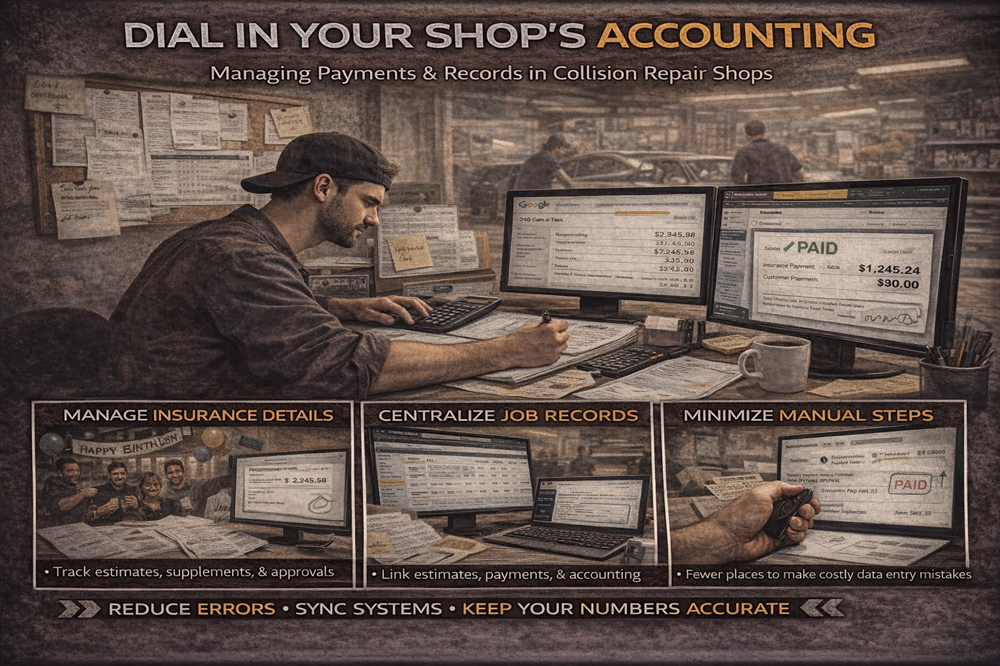
The best way to avoid accounting problems is to reduce the number of places where errors can happen.
Many accounting problems in body shops come from information being stored in too many different places. Estimates may be stored in one system, parts orders in a manager’s head, payment records on receipts by the front desk, and accounting records in a book buried in the back office. When employees then have to move the same information from one place to another, mistakes become much more likely.
This is where modern collision repair management software can make a major difference. Many of these systems connect estimating, job tracking, payments, and accounting together. When estimates turn directly into invoices, and payment information flows into accounting records automatically, the number of manual steps drops significantly.
Fewer manual steps mean fewer chances for something to be entered incorrectly or forgotten.
Margins in collision repair can be tight, and the financial side of the business is under more scrutiny than ever. Keeping your records accurate prevents problems with taxes, insurance payments, and financial reporting. Shops that invest in modern, organized systems and train their team to use them properly are far less likely to face unpleasant surprises.
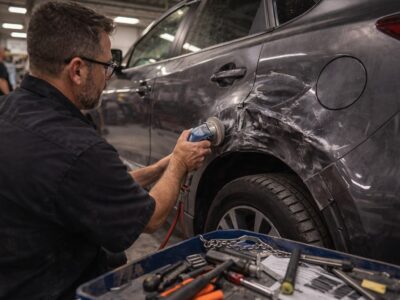


Collision repair accounting gets complicated fast because every job ties together parts, labor, insurance, and customer payments at the same time. How many shops truly know their real job profitability once all those pieces settle?