
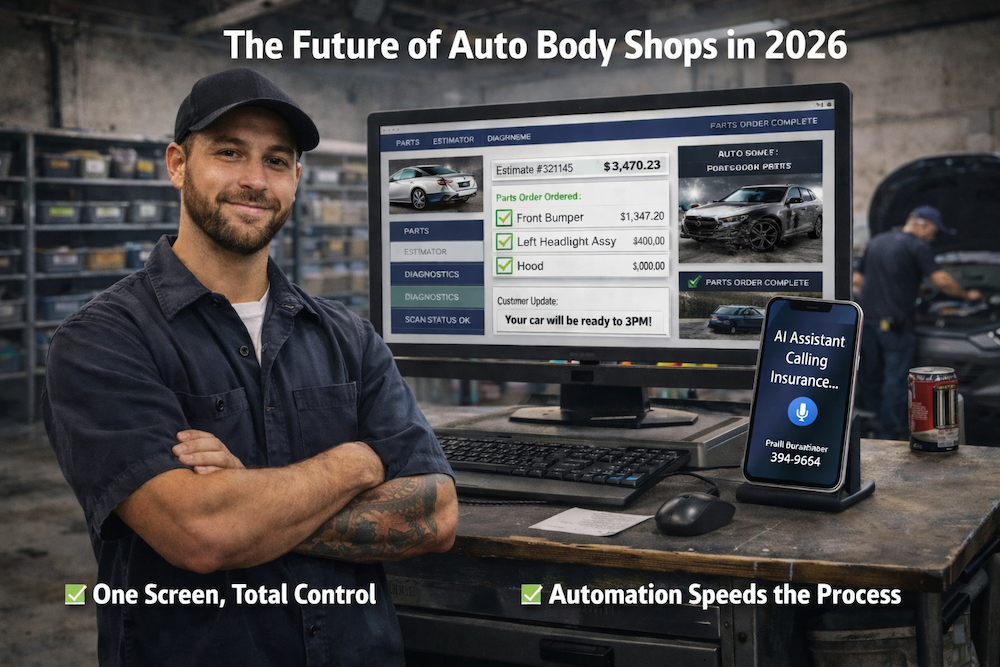
1. One Screen Does It All
Walk into any calm, efficient auto body shop, and you will notice the same thing: a single screen running the operation. This change is already common in restaurants and small storefront businesses, where orders, payments, and recipes flow through one system while staff focus on execution.
In these auto body shops, no one prints, and no one retypes. Work flows smoothly because every system talks to each other.
- The estimate is written
- Parts are ordered
- Scan reports are attached
- The customer receives updates
All from one place.
The shops that still use three different programs are effectively moving paperwork digitally from station to station, while the shop next door is already painting the car.
2. The Bot Makes the Call
Completing supplements no longer wait for the decision maker or owner. When workflows live on a single screen, auto body shops can begin to automate steps that once required manual review.
Every shop operates differently, and adopting new technology takes time to fit each workflow. However, automation has one hard requirement: visibility. If a repair file still lives on paper, or a mix of digital and paper, the system cannot see it, and automation is impossible.
As more decisions shift to software and AI-driven systems, negotiation will be reduced, but it rewards body shops that clean and consistently document required work, allowing repairs to move forward without delays or confusion. You either operate in the cloud or you lose time and efficiency.
What It Means
The size of the building does not matter. The number of employees does not matter. The number of repair orders does not matter. The shop that moves data first moves cars first.
Small crew, fast fingers, cloud-native beats the giant with the slow front desk every single day.

If you’re #4 (double-entry), tell me what systems you’re juggling — I’m mapping the most common stacks.